The float test is everywhere. Drop a spoonful of your starter in water. If it floats, it’s ready. If it sinks, keep waiting.
Here’s the problem: the float test lies. Regularly.
A starter can float and be past its peak — depleted, acidic, and not strong enough to leaven bread. A starter can sink and be at perfect peak activity — just not airy enough to float yet. Bakers who rely on the float test alone end up confused when their bread doesn’t rise even though their starter “passed.”
Here’s what I’ve learned after 2,973+ loaves testing every variable: your starter tells you what it needs in clear, consistent signals. Each time you want to try something new, you’re starting from scratch without a framework connecting the pieces. The float test picks up one of those signals — gas production — and ignores the rest. Once you know all five signs, you’ll never need to guess.
Let me save you the frustration of baking with a starter that looked ready but wasn’t.
Why Starter Readiness Matters So Much
Your starter is the only leavening agent in your bread. There’s no commercial yeast as backup. No baking powder. The wild yeast and lactic acid bacteria you’ve been cultivating.
If your starter goes into the dough at anything other than its peak of activity, you’re starting behind. Underactive starter = underfermented dough = dense, flat bread. Overripe starter = acidic, depleted, weakened rise = flat bread with a harsh sour taste.
Peak activity is a window, not a moment. It lasts 1-3 hours depending on your starter’s health and your kitchen temperature. Your job is to catch it in that window.
Here are the five signs that tell you exactly when you’re in it.
Your starter is a living thing. It responds to your kitchen, your flour, your timing. After 2,973+ loaves, I can tell you there’s no single right answer
— but there is a method that works for your life.”
5 Signs Your Sourdough Starter Is Ready to Bake With
Sign 1: It Has Doubled in Size (the Volume Test)
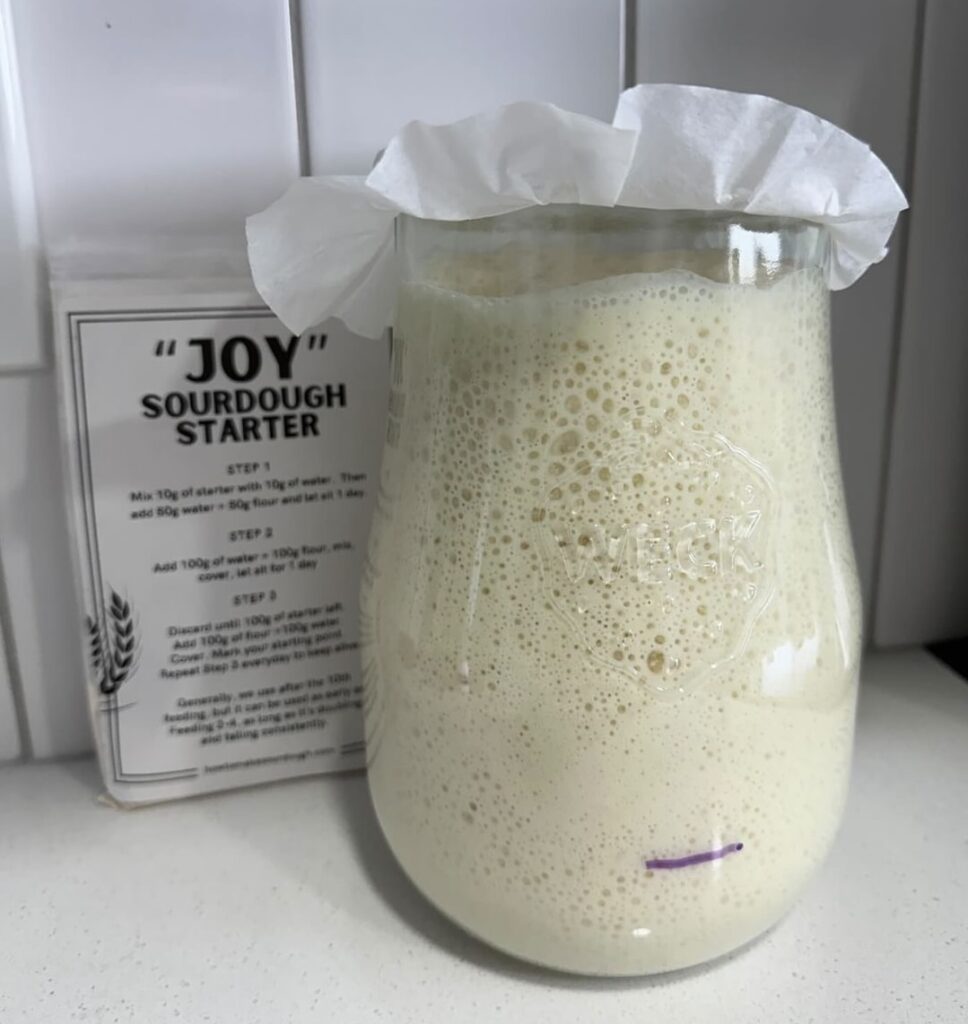
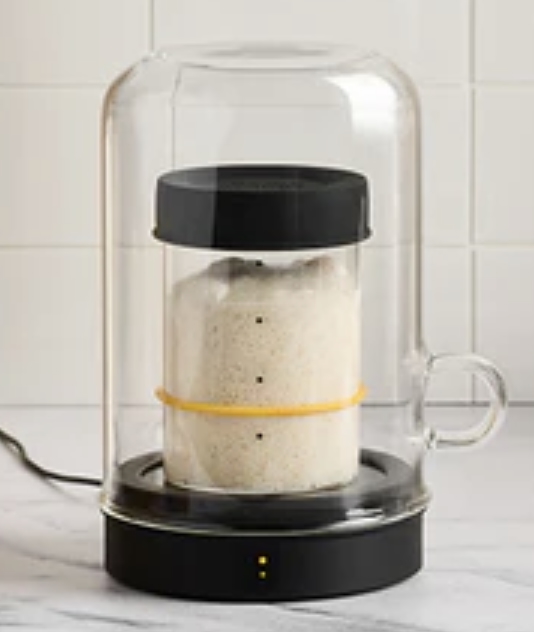
Here’s the thing: after a feeding, a healthy starter will rise significantly — roughly doubling in volume. Mark the level right after you feed it with a rubber band or tape. When the starter has risen to twice that mark, it’s in its active window.
Here’s the thing: how fast this happens depends on your kitchen temperature. In a warm kitchen (75-78°F), it might take 4-6 hours. In a cooler kitchen (68-70°F), it can take 8-12 hours. That’s normal.
What you don’t want: a starter that barely moved at all (under-established or overly cold) One that rose dramatically and then collapsed back down before you noticed. If yours keeps collapsing before you use it, feed it more frequently or use it earlier in the rise.
This is your most reliable baseline sign. Track it every time.
Sign 2: The Top Is Domed or Slightly Peaked
At peak activity, the surface of your starter will dome slightly upward — like a hill, not like a crater. This dome tells you the yeast is still producing CO2 and the culture is in its active phase.
When the dome starts to flatten or the surface looks concave (curving inward like a bowl), your starter has passed peak. It’s still alive — it just burned through its food supply and is now in the decline phase. You can still use it, but your results will be less reliable.
Here’s what matters: watch the dome. It’s a more accurate gauge than any timer.
Sign 3: It Smells Like Mild Yogurt, Beer, or Fresh Bread
Smell is one of the most useful and least-talked-about starter readiness signals.
At peak activity, a healthy starter smells pleasantly tangy, like plain yogurt, mild beer, or the yeast-forward smell of bread dough. It’s an appealing, fermented smell, not an aggressive one.
Smells that tell you something is off:
- Sharp nail polish or acetone smell = too much acetic acid, starter is hungry or stressed (normal in young starters, feed it more regularly)
- Very strong vinegar smell = overripe, past peak, needs a feeding
- No real smell at all, flour = starter may be too cold or not yet active
The yogurt-beer smell is your target. Trust your nose, it picks up fermentation chemistry your eyes can’t.
Here’s the thing: once you know what a healthy active starter smells like, you won’t forget it.
Sign 4: The Texture Is Bubbly and Webby Throughout
Here’s why this works: scoop a small spoonful of your starter and look at the texture. At peak activity, it should be full of bubbles, not just on the surface but throughout the whole culture. Stir it and you’ll see it’s stringy and slightly gelatinous, with a web-like structure.
This webby texture is the gluten structure in the flour, developed by bacterial activity over the feeding cycle. It’s a sign of a well-developed, active culture.
Contrast this with a starter that looks soupy and liquid One that looks dense and heavy with no bubbles, both indicate it’s either overly hungry or not yet mature.
Upgrade hint: Understanding the bacterial activity inside your starter, what the different microorganisms do and when they peak, is part of what I cover in the Starter Science section of Bread ASAP. It makes the timing make sense instead of feeling like guesswork.
Sign 5: It Passes the Spoon Drag Test (Better Than the Float Test)
Here’s a better version of the float test: drag a spoon through the surface of your starter. At peak activity, it should feel slightly resistant and spring back a little, like a loose gel. The surface should hold a brief trace of the spoon’s path before settling.
Contrast this with:
- Starter that’s very liquid, spoon drags through with no resistance, overripe or very hungry
- Starter that’s very thick and heavy, barely moves, may be too cold, or needs more water in the feeding
If your starter passes the spoon drag test, has the dome, the bubbly texture, and the right smell, you can skip the float test entirely. You already have four stronger data points.
The Float Test: When It Works and When It Doesn’t
The float test works when your starter is very, vigorous, so full of CO2 bubbles that it’s literally lighter than water. This is a valid sign of peak activity. But it’s not the only valid sign, and it’s not always achievable.
Starters that are slightly earlier in the rise cycle may not have enough trapped gas to float, but they’re still in their active window and will work beautifully in bread.
Starters that are past peak but still have residual gas may float, but they’re in decline and will give you weaker results.
Use the float test as one of five signs, not as the definitive answer.
How Old Does a Starter Need to Be Before It’s Ready?
A newly made starter needs 10-14 days of consistent feedings before it’s strong and predictable enough to leaven bread. In the first week, it may show some activity but isn’t yet established. By day 10-14, if you’ve been feeding regularly (once or twice daily), you’ll see consistent doubling and the signs above reliably.
If you’ve been making a starter for two weeks and still can’t see reliable rise and dome, consider these possibilities:
- Your kitchen is too cold (below 65°F consistently, move it to a warmer spot)
- Your water is heavily chlorinated (switch to filtered water or water left out overnight)
- You’re feeding with bleached flour (switch to unbleached, or add 10% whole wheat)
- Your feeding ratio is off (try 1:1:1 by weight, equal parts starter, flour, water)
For more on the full cultivation process, the 7-day starter guide walks you through exactly what to expect each day.
What Happens If You Bake With Starter That Isn’t Ready?
Too early (before peak): Your bread will rise slowly or not at all. Dense crumb. You might see some oven spring if the starter is close, but the final loaf will be tighter than it should be.
Too late (past peak, collapsed): The starter is acidic and depleted. It can still produce some rise, but the flavor will be sharper and more sour. The gluten development in your dough may be weaker because the acids have been breaking down protein for too long.
At peak: Maximum rise, best flavor balance (mildly tangy, not sharp), strongest gluten development in your final dough.
Still Fighting With Your Starter After Weeks of Trying?
The truth is, this is one of the most common places beginners get stuck. You’ve been feeding consistently. You’re watching for the signs. But something’s still not clicking, the rise is inconsistent, the timing is unpredictable, and you don’t fully trust what you’re seeing.
There’s a shortcut: skip the cultivation entirely.
Here’s what matters: my Proven Starter ($19.99) ships dehydrated for safe transit. It’s already established, the wild yeast culture is strong, the feeding history is consistent You’re starting from a place of proven activity rather than building from scratch.
This is what I send to bakers who’ve been at this for weeks and can’t get their homemade starter to peak reliably. Sometimes the issue is chlorinated water. Sometimes it’s flour quality.
Real talk: sometimes the kitchen is just too cold. Sometimes You want to start baking bread without the two-week cultivation. All valid reasons.
The Proven Starter comes with a 60-day “It Works Or Free” guarantee and free US shipping. If it doesn’t perform, I’ll replace it or refund it, no questions.
Not ready for a starter buy? The Bread ASAP class ($47) includes a complete starter readiness module, video walkthrough, the full 5-sign framework How to time your feedings so your starter peaks exactly when you need it for your bake. 60-day guarantee.
Frequently Asked Questions About Sourdough Starter Readiness
How do I know when sourdough starter is ready to use?
How long after feeding is sourdough starter ready?
Can I use sourdough starter straight from the fridge?
Why does my sourdough starter float sometimes and sink other times?
My starter smells very sour or like vinegar, is it ruined?
You’ll Know Your Starter
Once you know these five signs, you stop guessing. You start reading. That shift, from following instructions to reading your dough and your starter, is the difference between baking that works and baking that doesn’t.
If you’re building your starter from scratch, the 7-day guide to making sourdough starter gives you the full day-by-day process with what to expect at each stage. And for the complete beginner bake, the first loaf guide walks you through everything after your starter is ready.
Happy baking. Roselle
What does your starter smell like right now? Leave a comment. I can help you diagnose where it’s at and what it needs.