How To Make Sourdough
Beginner Path System
Start Here Starter First Loaf Troubleshooting Get Guided Version

Here you’ll find FREE easy step by step tutorials about Sourdough Baking

Baking Sourdough Bread: How To Shape Sourdough “The Right Way”

November 3, 2024 by admin 8 Comments

Mindblower, game changer ⤵️

Okay, so last November when I started to grow in followers, I shared this bit of sourdough baking advice that I couldn’t believe no other sourdough baker was teaching

And I WAS SHOCKED because surely, I didn’t invent this, I just stumbled upon it…

And when I shared this back then, SO MANY of you told me it’s how you plan on baking sourdough bread from now on

SO WHAT IS IT?  WHAT DO I DO DIFFERENTLY?

Well, it’s the way I shape my sourdough bread!

NO, this isn’t about using 

the tri-fold method vs 

the envelope method …or even vs 

the new trendy caddy clasp method I see now…

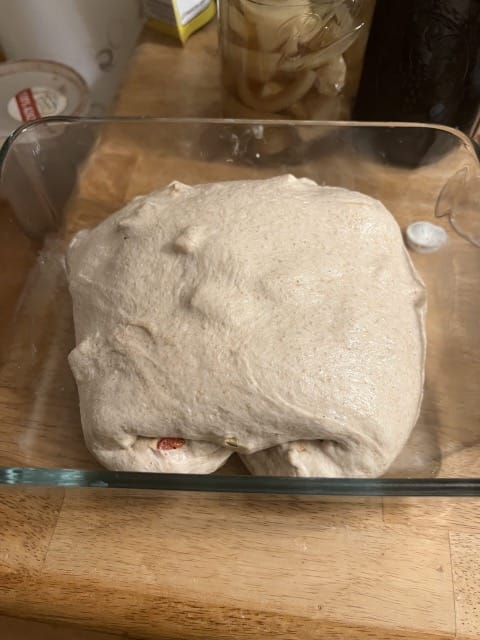
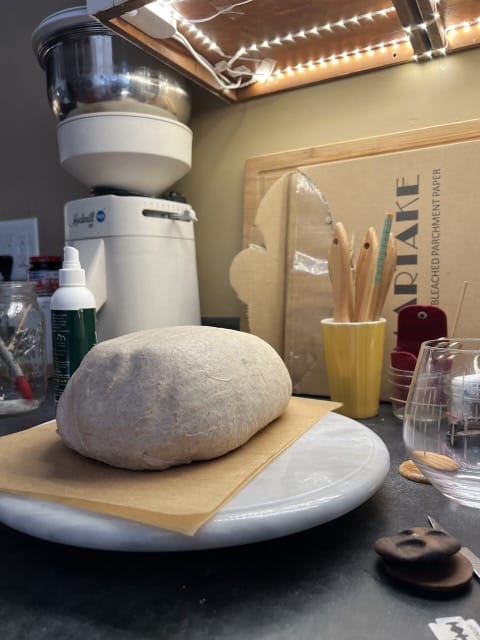
My sourdough baking CHANGED when I realized I could shape my sourdough bread with WATER instead of FLOUR

Yes, you read that right☝️

You see, I have a really very small kitchen, 

With an even smaller counter space

So kitchen real estate is very previous

And so doing things this way has SO MANY BENEFITS:

  1. LESS MESS to clean up —no flour everywhere
  2. No eating raw flour (more on this below)
  3. Less flour used = more money saved

💡How does this work? ⤵️

The whole point of folding is to build the gluten network so the dough holds its shape. 

And Shaping is really just a series of rapid folding/kneading.

While you are building this gluten network through your folding and shaping, the surface of the dough starts to get SMOOTH and TAUT. 

This is the gluten network building right before your eyes. 

THIS IS WHAT STOPS THE DOUGH FROM STICKING to you, your liner, your banneton, etc.

As long as you are building surface tension in your dough, the dough doesn’t get sticky.

💡So what do I do EXACTLY?

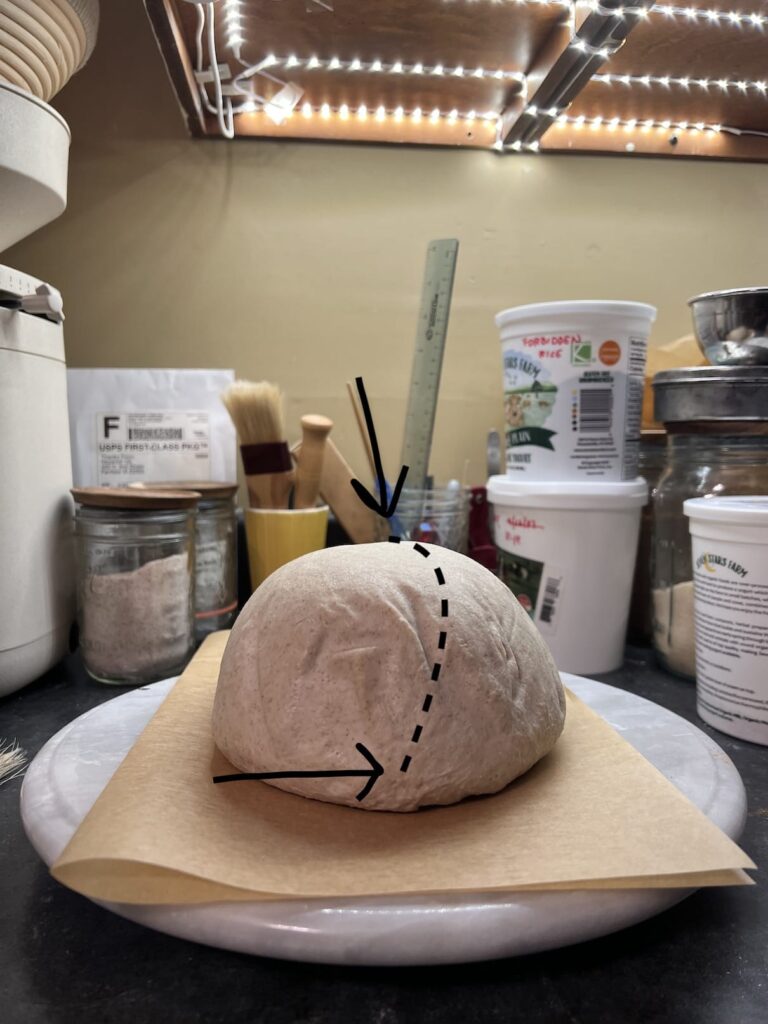
Instead of dusting my table with flour, I wet my hands and wipe the table with a tiny layer of water and then I shape my sourdough dough

And instead of dusting my banneton with flour, I simply just place my dough in my banneton that’s lined with a cotton tea towel

As long as you are building surface tension in your dough, the dough doesn’t get sticky.

VIDEO TUTORIALS:

In this ☝️ video, I’m shaping my soft white sourdough —a LOW hydration dough (67%). It’s a stiff dough, but once fermented, it acts like a blob. It is one of the easiest doughs to shape —so it has always perplexed me why so many people shape this kind of dough with so much excess raw flour.

⭐️ COUNTRY SOURDOUGH ⭐️
In this ☝️ video, I’m shaping my country sourdough —a HIGH hydration dough (74%). It’s a wetter dough, so will be a bit sticky. No worry, the method is the same as in part 1.

All you need is your trusty metal bench scraper. Simply wet it down with some water and you’re good to go. Follow along with me in the video!

It also helps to wet your hands and work surface lightly before you dump the dough on your work surface.

⭐️ WHOLE WHEAT SOURDOUGH ⭐️
In this ☝️ video, I’m shaping my whole wheat sourdough —a VERY HIGH hydration dough (84%). It’s a much, MUCH wetter dough than the last two doughs so it can be very sticky. Not to worry, the method is the same as in part 1 and 2!

All you need is your trusty metal bench scraper. Simply wet it down with some water and you’re good to go. Follow along with me in the video!

It also helps to wet your hands and work surface lightly before you dump the dough on your work surface.

In this ☝️ video, you see the final reveal of each three of the sourdough breads in this shaping tutorial.

My opinion, conclusion:

The industry standard of using flour to dust your dough for shaping and proofing, is unnecessary –you’re only just introducing raw flour so late in the game.  This is why some people get gassy and bloaty when eating sourdough –because all that excess raw flour is not fermented!  So guess what’s fermenting it?  YOU!
Filed Under: Sourdough Bread Tips, Sourdough Tutorials

How To Feed Your Sourdough Starter

August 20, 2024 by admin Leave a Comment

The key to exceptional sourdough bread is a strong, well-fed starter. At the heart of it all is understanding the relationship between your starter and its feeding regimen.

Your sourdough starter is a living, breathing organism that requires the right nourishment to thrive. It needs to be fed regularly to stay happy and vibrant. Skimp on the feeding, and your starter will become weak, sluggish, and unresponsive.

Sourdough Starter FeedingInstructions

Here’s a simple, step-by-step guide to feeding your sourdough starter like a pro:

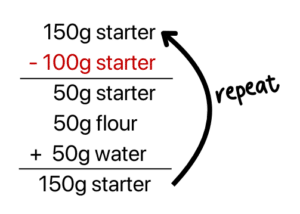
Before feeding, discard ⅔ of your starter. Keep ⅓.

Example: 150g starter → discard 100g → keep 50g

Feed what’s left with equal parts flour and water—same weight as your starter.

Example: To the 50g you’re keeping → add 50g flour + 50g water = 150g starter

After feeding, your starter will rise, peak, and fall back down. Repeat these steps to feed and keep your starter alive.

We can keep doing this indefinitely, see below:

What do we do with the discard?

Now, back to the 100g of starter we discarded –you have a few options on what to do with this:

  1. Use it right away to bake sourdough bread (using it as a leavening agent)
  2. Add it to a discard jar in the fridge to save for future baking (using it to add flavor/texture to recipes, but not to leaven it)
  3. Simply discard/throw it away if you don’t have an immediate use for it

What are starter feeding ratios?

A sourdough starter feeding ratio refers to the proportions of starter, flour, and water used when “feeding” or replenishing an active sourdough starter.

The 1 : 1 : 1 sourdough starter feeding ratio

1 part starter1 part flour1 part water
50g50g50g

The most common sourdough starter feeding ratio is 1:1:1. This means:

1 part starter
1 part flour
1 part water

For example, if you have 50g of active sourdough starter, you would feed it with:

50g flour
50g water

This 1:1:1 ratio provides the starter with the right balance of food (the flour) and water to keep it healthy and active. The starter consumes the flour, produces carbon dioxide, and becomes bubbly and ready for baking.

Other common sourdough starter feeding ratios include:

1:2:2 (1 part starter, 2 parts flour, 2 parts water)
1:5:5 (1 part starter, 5 parts flour, 5 parts water)

The 1:1:1 ratio is often recommended for general starter maintenance, as it keeps the starter at a manageable size. The higher flour and water ratios (like 1:5:5) can be used when you need to build up a larger volume of starter quickly for baking.

Regardless of the specific ratio, the key is maintaining a consistent, balanced approach to feeding your sourdough starter. This ensures it stays strong, active, and ready to leaven your homemade sourdough breads.

How often do you need to feed your sourdough starter?

For most home bakers, feeding the sourdough starter once a day is the sweet spot when storing it at room temperature (around 70°F). This keeps the starter active, healthy, and ready to use for regular baking.

At room temperature, the starter is consuming the available food (flour and water) fairly quickly, so it needs that daily refresh to maintain peak performance.

However, if you don’t need to bake with the starter very frequently, storing it in the refrigerator at around 36-40°F can work well. In the cooler fridge environment, the starter’s metabolism slows way down, so it only needs to be fed about once a week to stay viable.

Feeding a refrigerated starter just once a week is usually sufficient to keep it alive and ready for use. The cooler temps put the starter into a semi-dormant state, greatly reducing its need for frequent feedings.

This makes refrigerator storage a convenient option for bakers who don’t need their starter on a daily basis. It minimizes waste and upkeep while still preserving a healthy, usable starter for whenever you’re ready to bake.

Discarding Before Feeding

The reason why we discard sourdough starter before feeding it is because the starter needs to be fed its own weight in flour.

If we didn’t discard any of the existing starter, and just kept adding new flour and water on top of it, the total volume would grow exponentially with each feeding.

What would happen if we didn’t discard?

See This 50g Sourdough Starter Turn Into 241lbs In Just 7 Feedings (1:1:1)

Feeding 1Feeding 2Feeding 3Feeding 4Feeding 5Feeding 6Feeding 7
Starter50g150g450g1,350g4,050g12,150g36,450g
Flour50g150g450g1,350g4,050g 12,150g36,450g
Water50g150g450g1,350g4,050g 12,150g36,450g
Total150g450g1,350g4,050g12,150g36,450g109,350g

NOTE: If you’re viewing on your phone/tablet, you can use your finger to gently move the table left to right to see the entire table

For example, let’s say we start with a 50g sourdough starter. If we feed it 50g of flour and 50g of water, the total volume is now 150g.

Then for the next feeding, since we are not discarding, and we have to feed the starter at least its body weight it flour, now we add 150g of flour and 150g of water to the 150g starter. That makes it 450g total.

And if we continued this pattern without discarding, in just 7 feedings the 50g starter would balloon up to a massive 241 pounds!
That’s why the discarding step is so critical – it prevents the starter from growing out of control.

By removing a portion before each feeding, we can maintain the proper 1:1:1 ratio and keep the total volume at a manageable size.

What to do with discard

Discard is simply the portion of the sourdough starter that you remove before feeding the remaining starter. It’s the excess starter that you don’t need to feed at that particular time.

You have three options for what to do with the discard:

If the starter was just fed, use the discard to bake sourdough bread, adding leavening power

If the starter was not recently fed, store discard in a discard jar that lives in your fridge. Use occasionally in discard recipes, where it adds flavor but no leavening

Discard it completely and throw it away

Filed Under: Sourdough Starter Tips, Sourdough Tutorials

How To Use Roselle’s Sourdough Starter

August 19, 2024 by admin 1 Comment

Congratulations! You have received my sourdough starter in the mail. Now it’s time to activate it so you can have an active and mature sourdough starter in as little as 2-3 days.

Watch this video first so you get a quick overview on what you’re going to do the next few days:

Step 1 – Day 1

Feeding #1

  • Put 10g of dry starter into a jar
  • Then add 60g of water, mix
  • Then add 50g bread flour, mix
  • Cover, mark your starting point
  • Let sit 1 day in a warm place

Step 2 – Day 2

Feeding #2

  • Add 100g of water, mix
  • Add 100g bread flour, mix,
  • Cover, mark your starting point
  • Let sit for 1 day in a warm place

Step 3 – Day 3

By Day 3, your starter should look like this. You can now use this as-is to make sourdough bread. But if you’re not ready, proceed with Feeding #3

Feeding #3

  • Take 100g of sourdough starter,
  • Add 100g water, mix
  • Add 100g flour, mix
  • Cover, mark your starting point
  • Let it sit for 1 day in a warm place
  • Repeat this everyday to keep alive

ATTENTION

Generally, we use our starter after the 10th feeding, but it can be used as early as Feeding 2-4, as long as it’s doubling and falling consistently.

Instructions:

Very easy: Mix 10g of my dehydrated sourdough starter with 10g of water, mix that up.

This hydrates the starter.

Then add 50g of water and 50g of bread flour. This is your first feeding. Mix that up.

Cover, leave alone for 2 days. Done.

It will rise and reach peak state around 48hrs. Take 100g to make sourdough bread or discard. There will be around 20g left in your jar for you to feed and carry on your starter.

Sourdough Starters 101

Now that you have your copy of my sourdough starter, here are some very helpful links I recommend you go through:

How To Feed Your Starter

How To Use Your Starter In Recipes

Where To Keep Your Starter

How To Keep Your Starter Alive

Sourdough Starter Kit

Click on the links individually down below, OR see this kit as a collection on my Amazon Storefront: Sourdough Starter Kit – Sourdough Baking

Sourdough Starter Kit

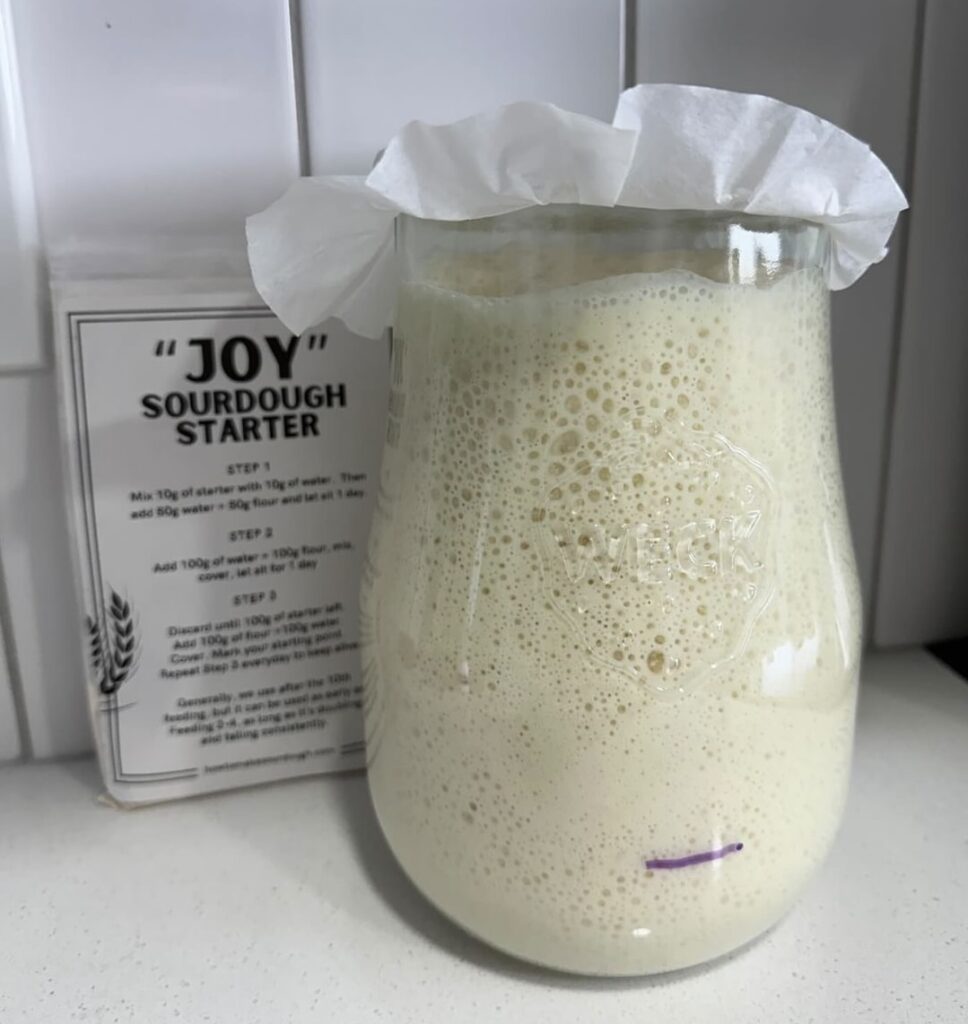
Here are my #1 favorite and preferred tools for Sourdough Starters. These are the winners of three years of comparison shopping, research and testing.

Sourdough Starter

Thermometer and Hygrometer

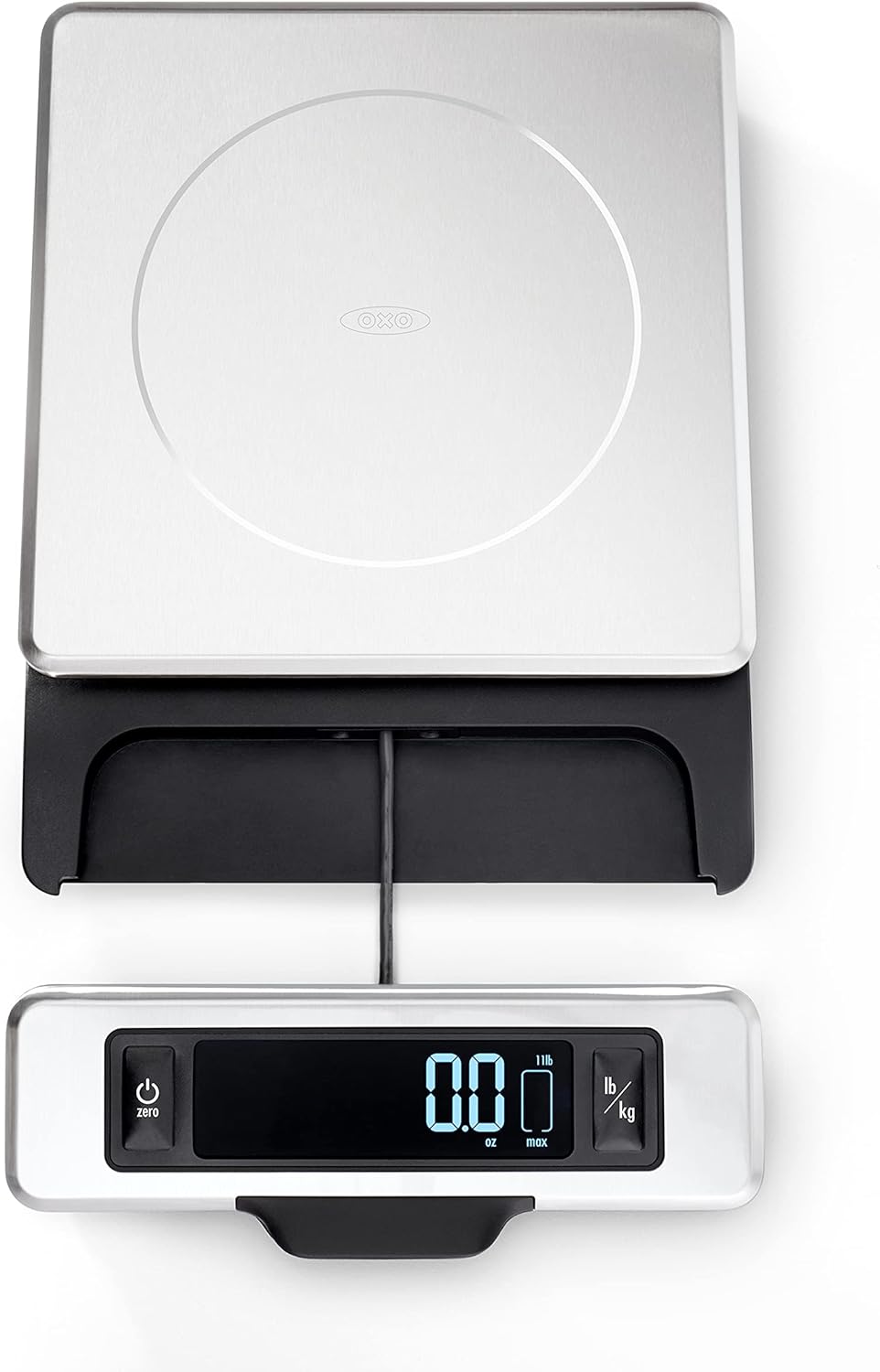
My Favorite Kitchen Scale

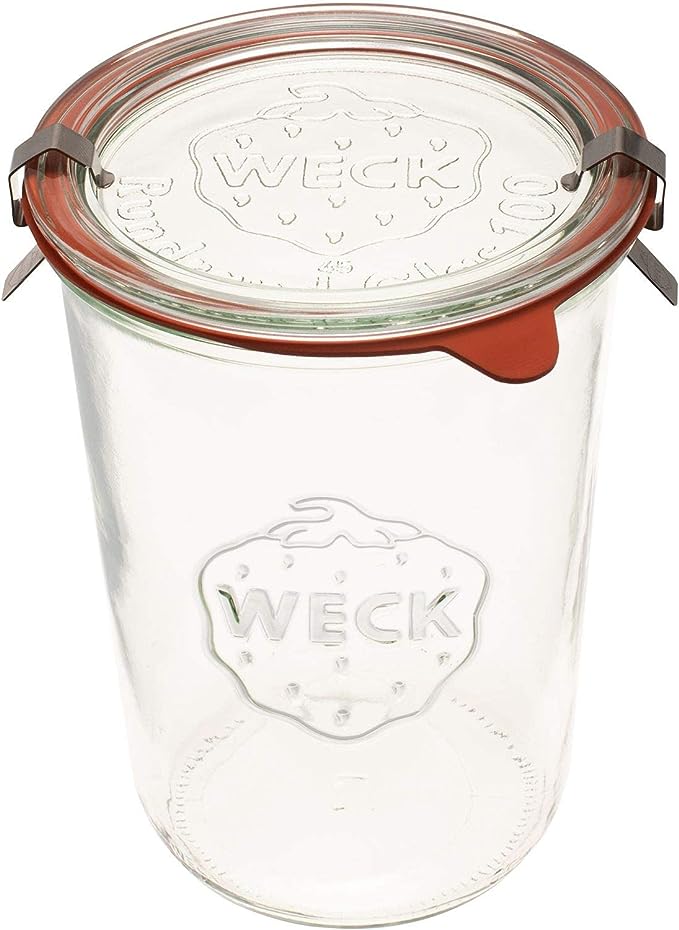
Weck Jars

Off-set metal spatula 4.25″

Bread Flour

Dark Rye Flour

Brod & Taylor Proofer

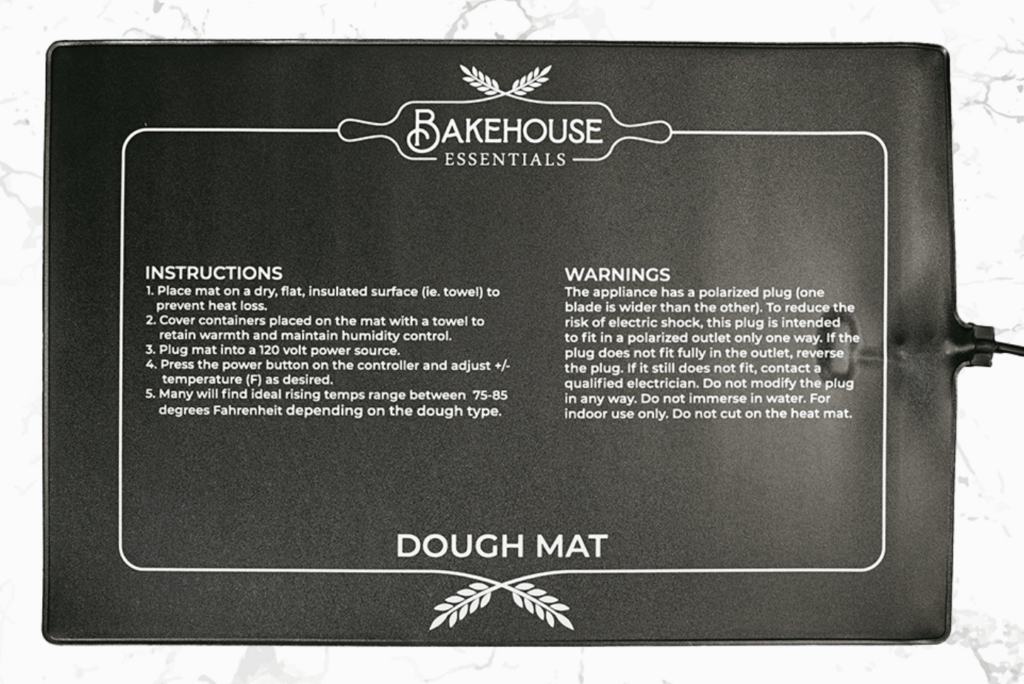
Dough Mat

Use Code ROSELLE10 for 10% OFF

Rubber Bands

Dry Erase Marker

Filed Under: Sourdough Starter Tips, Sourdough Tutorials

How To Use Your Sourdough Starter In Sourdough Recipes

August 19, 2024 by admin 2 Comments

There are 2 ways you can use your sourdough starter in sourdough recipes: the Levain Method and the No-Discard Method.

Let’s explore the pros and cons of each approach to help you determine which one might work best for your sourdough baking needs.

The Levain Method

The Levain Method involves creating a separate starter culture that you’ll use specifically for your recipe. This involves taking a portion of your main sourdough starter and feeding it to create the levain.

Pros of the Levain Method:

Flexibility – The levain gives you the ability to create a starter that is tailored to the specific recipe. For example, if you have an all-purpose flour starter but the recipe calls for 100% whole wheat, you can make a whole wheat levain.

Starter Maintenance – By separating the levain from your main starter, you can keep your primary starter small and more manageable, making it easier to maintain.

Cons of the Levain Method:

Additional Steps – Creating the levain adds an extra step to your baking process, which can be time-consuming for beginner bakers.

Increased Dish Washing – The levain method requires an additional container and utensils, leading to more dishes to clean up.

Potential for Forgetting – If you’re not diligent, it’s easy to forget to maintain both your main starter and the levain, which can lead to issues.

For example:

Let’s say your regular sourdough starter is made with all-purpose or bread flour, but you want to make a 100% whole wheat sourdough bread. In this case, the Levain Method allows you to take a portion of your main starter and feed it into a 100% whole wheat levain specifically for that recipe. Here’s how that would work:

Suppose your recipe requires 100g of sourdough starter. Instead of using your regular starter directly, you would take 25g of that starter and feed it with 50g of whole wheat flour and 50g of water. This creates a 125g whole wheat levain that you can then use in your 100% whole wheat sourdough bread recipe.

The advantage here is that you get to maintain your original starter, while also customizing a levain that perfectly matches the needs of the specific recipe. This allows you to bake a truly 100% whole wheat sourdough bread, even if your regular starter isn’t formulated that way.

The Levain Method gives you this flexibility to create starter cultures tailored to the recipe at hand. Whether it’s a whole wheat, rye, or any other specialty flour blend, the levain can be dialed in to ensure your final bread has the desired characteristics.

This level of control and customization is a key benefit of the Levain Method, as it allows you to optimize the leavening agent for each unique sourdough recipe. It’s a versatile technique that expands the possibilities when baking with your sourdough starter.

The No-Discard Method

The No-Discard Method involves using your main sourdough starter directly in the recipe, without creating a separate levain.

Pros of the No-Discard Method:

Simplicity – This method is more straightforward, as it eliminates the need to create a levain, reducing the number of steps in your baking process.

Less Waste – When the starter reaches its peak, you feed it. What you discard goes straight into making dough

Fewer Dishes – With only your main starter to maintain, you’ll have fewer containers and utensils to clean.

Cons of the No-Discard Method:

Lack of Customization – You’re limited to using your main starter as-is, without the ability to tailor it to the specific recipe.

When deciding between the Levain Method and the No-Discard Method, consider factors such as your baking frequency, the complexity of your recipes, and your personal preferences. The Levain Method offers more flexibility and control, while the No-Discard Method is simpler and generates less waste.

Ultimately, the best approach will depend on your individual needs and experience level as a sourdough baker. Experiment with both methods and find the one that works best for you and your baking style.

Step By Step Instructions

Let’s dive deeper into the step-by-step process for both the Levain Method and the No-Discard Method when incorporating your sourdough starter into bread recipes.

The Levain Method:

Let’s say the recipe calls for 100g of sourdough starter.

Take a portion, like 20g, of your main starter.

Feed the 20g of starter with an equal amount of flour and water. For example, 50g of flour and 50g of water. This creates 120g of levain.

Let rise at room temp until it reaches its peak (approx. 4-8hr. at 70F)

Then measure out 100g to use in your bread recipe. Any remaining levain can be added back to your main starter, saved in a jar to use for discard recipes or thrown away.

Proceed with the rest of your bread recipe, using the 100g of levain as the leavening agent.

Maintain and feed your main sourdough starter as usual, keeping it separate from the levain used for baking.

The No-Discard Method:

Let’s use the same example, where the recipe calls for 100g of starter.

Take your existing sourdough starter, which let’s say is 50g.

Feed the 50g of starter with an equal amount of flour and water, creating 150g of fresh starter. The feeding ratio would be 1:1:1 (50g starter : 50g flour : 50g water).

From the 150g of fed starter, you will “discard” 100g by using it for your bread recipe.

The remaining 50g becomes your new standing starter, which you can now maintain and feed as usual.

The key differences between the two methods are the extra step of creating a separate levain in the first approach, versus directly using your main starter in the second method.

Both are valid techniques, and the choice will depend on your personal preferences, recipe requirements, and the size of your main sourdough starter.

Filed Under: Sourdough Starter Tips, Sourdough Tutorials

How To Keep Your Sourdough Starter Alive

August 19, 2024 by admin Leave a Comment

Consistent, Frequent Feedings

Feeding Frequency: If you’re keeping your sourdough starter at room temperature, the key is to feed it consistently, at least once per day, if not twice. The starter will likely rise and fall within 4-6 hours at room temperature, so frequent feedings are essential to keep it happy and active.

If the starter is being stored in the refrigerator, the feeding frequency can be reduced to once every 5-7 days, as the cooler temperature will significantly slow down its metabolism and consumption of the food.

But for starters maintained at room temperature, neglecting feedings is the quickest way for it to become sluggish and unresponsive. The starter needs regular replenishment of fresh flour and water to sustain its yeast and bacteria populations. Aim for at least one feeding per day, and potentially two if you notice it rising and falling rapidly.

Consistent, frequent feedings are the foundation of keeping a healthy, thriving sourdough starter, especially when it’s being kept out at room temperature.

NOTE: It’s okay to put your sourdough starter in the fridge indefinitely this is basically putting your starter in cold storage, for use someday. I have put my sourdough starter in the fridge, forgotten about it for months and it was still fine. All you have to do is get rid of the liquid on top, discard very heavily and feed at higher ratios, at least 1:5:5

Sourdough Starter Feeding Ratios

Use a baseline of 1 part starter : 1 part flour : 1 part water (by weight) as a starting point.

However, you can adjust the water amount as needed for your specific starter. The key is to feed it at least its own weight in flour. For example, see above. The starter weighs 100g, so you have to feed it at least 100g of flour. You can be flexible in how much water you feed it, but you have to feed the starter at least its own body weight in flour.

This 1:1:1 ratio provides a good balance of nutrients for the yeast and bacteria in the starter to thrive. However, you can experiment with adjusting the hydration levels by adding a bit more or less water as needed.

The most important thing is to make sure you’re feeding the starter at least its own weight in fresh flour. This ensures it has an adequate supply of food to consume and remain active.

The flexibility lies in the water amount, but the flour should always be at least equal to the starter’s weight.

Examples of different feeding ratios

1 : 1 : 1

1 part starter1 part flour1 part water
100g100g100g

1 : 5 : 5

1 part starter5 parts flour5 parts water
20g100g100g

1 : 10 : 10

1 part starter10 parts flour10 parts water
10g100g100g

Sourdough Starter Temp Control:

The temperature directly affects the speed of the starter’s fermentation. Cooler temperatures, around 60-70°F, will slow down the starter’s activity, causing it to take longer to consume the available food. Warmer temperatures, around 75-85°F, will speed up the fermentation, causing the starter to eat through its food more quickly.

Paying close attention to how your starter responds to different temperatures is key. The colder the environment, the longer the starter will take to reach its peak before running out of food. Conversely, the warmer it is, the faster the starter will consume its resources and begin to decline.

Controlling the temperature is an important lever you can use to adjust the pace of your sourdough fermentation to fit your schedule. Experiment with different spots in your kitchen and observe how the starter’s activity changes based on the ambient temperature.

Sourdough Starter Discard & Refresh

When feeding your sourdough starter, you can discard any amount of the old starter before adding fresh flour and water. Many bakers discard HALF of their starter. Or they prefer to do what I do, which is discarding heavily and feed at higher ratios, such as using a 1:10:10 or 1:50:50 ratio.

Why would you do this?

Well, discarding a larger portion of the existing starter and then feeding the remaining small amount with a much higher flour and water ratio serves an important purpose.

It helps provide the starter culture with an abundance of fresh, nutrient-rich food to consume. By retaining only a small percentage of the old starter and giving it a large volume of new flour and water, you are essentially “resetting” and rejuvenating the culture.

This can be especially beneficial if the starter has become sluggish/less responsive over time or if the starter has missed a few feedings and now it’s become too acidic.

The reasoning behind this heavy discarding approach is that it ensures the yeast and bacteria have ample resources to thrive.

Rather than just incrementally feeding the existing starter, the aggressive discard and high feeding ratio gives the microbes a boost of energy and food to work with.

So while the standard 1:1:1 feeding ratio is a solid baseline, don’t be afraid to experiment with discarding more and feeding at higher ratios like 1:5:5, 1:10:10 or even 1:50:50. This can help revive an underperforming or undesirable starter and keep it at peak activity.

What does a healthy sourdough starter look like?

A healthy, happy sourdough starter has a very distinct appearance and behavior. Here’s what you want to look for:

Appearance:

  • Smooth, creamy texture without any separation or dry edges
  • Lots of small, uniform bubbles dispersed throughout the starter
  • Doubles or even triples in volume after being fed

Aroma:

  • Pleasant, yeasty smell similar to freshly baked bread
  • No unpleasant or off-putting odors

Behavior:

  • Rapidly becomes very active and bubbly after being fed
  • Rises dramatically in the hours after feeding, then falls back down
  • Consistently exhibits this rise and fall cycle every time it’s fed


When you look at a healthy starter, it should appear vibrant, alive, and ready to work. The bubbles are an important sign – lots of tiny, evenly distributed air pockets indicate the yeast is very active and producing gas.

The dramatic expansion in volume after feeding also showcases the starter’s strength and metabolic power. Seeing it double or triple in size lets you know the microbes are consuming the new food sources rapidly.

And of course, that wonderful yeasty aroma is a telltale sign of a happy, thriving sourdough culture. Any funky, alcoholic, or unpleasant smells would be a red flag that something is off.

Overall, a healthy starter just exudes vitality. It’s lively, responsive, and consistently demonstrates the rise and fall cycle that indicates it’s well-fed and ready to go for baking. Pay close attention to these visual and olfactory cues to ensure your starter is in peak condition.

Troubleshooting Your Sourdough Starter

When it comes to troubleshooting your sourdough starter, there are a few common issues that can arise and some adjustments you can make to get it back on track. Let’s go through some of the most common problems:

Sluggish Activity:

If your starter is not rising and falling as dramatically as it should after being fed, that’s a sign it may need some adjustments. This could be due to:

  • Feeding too soon – Try waiting every two days to feed your starter. You are waiting for the starter to rise and fall. Sometimes it may take up to 2-3 days for a starter to do this. Especially starters that are being revived from cold storage or dry state.
  • Out of balance – If your starter has become funky, alcoholic, or smells unpleasant… then something is off. Discard heavily, perhaps discarding until you only have 10g of starter to feed. Then feed at a higher starter:flour:water ratio, maybe try a 1:10:10 feeding ratio or more.
  • Temperature too cool – Make sure the starter is being stored in a warm enough environment, ideally 70-80°F.

Unpleasant Aroma:

If you notice sour, alcoholic, or just generally off-putting smells coming from your starter, that indicates an imbalance in the microbial culture.

Discard most of the starter, and “wash” the remainder of the starter by adding some water into the jar, mixing it up and discarding half of that starter/water mixture. Then feed it at a high feeding ratio of at least 1:10:10, if not more, to help “reset” the culture.

Separation/Hooch:

Seeing liquid (hooch) forming on top of the starter or dry, crusty edges are signs it’s becoming too hungry between feedings.

If you see hooch forming on the surface of your starter, the first step is to carefully pour off the excess liquid before discarding and feeding the starter.

Pouring off the hooch helps remove the built-up alcohol and sugars that have separated out. This allows you to then discard and feed the remaining starter with fresh flour and water, providing it with the nutrients it needs.

Skipping the step of pouring off the hooch before discarding and feeding can reintroduce those undesirable byproducts back into the starter culture. It’s an important part of the process to get the starter back on track.

Signs Your Sourdough Starter Has Gone Bad

When diagnosing a sourdough starter that has developed mold, there are a few key things to look for and steps to take:

Visual Inspection

The first and most obvious sign of mold will be the visual appearance. Look for any fuzzy, colored growths on the surface of the starter – this is the telltale sign of mold. It may appear green, blue, white, or even black in color.

If you notice your starter taking on a pinkish or orangey hue, that could be an indicator of a bacterial contamination. The color is often a result of certain types of bacteria proliferating in the starter. This usually happens *right before* the starter starts to mold. So as soon as you see a pink or orange film on your starter, know that mold is just around the corner.

Smell Test

In addition to the visual inspection, use your nose to assess the starter. A moldy starter will often have an off-putting, musty or rotten smell that is distinctly different from the normal sourdough aroma.

Check the Environment

Consider the storage conditions of the starter. Mold can thrive in environments that are too warm, damp, or have poor air circulation. Make sure the starter is being stored properly in a clean jar at the right temperature range.

Discard and Start Anew

If you confirm the presence of mold through visual and olfactory cues, the best course of action is to discard the entire contents of the starter jar. Mold spores can easily contaminate an entire culture, so it’s not worth trying to salvage it.

Thoroughly clean the jar and any utensils that came in contact with the moldy starter. Then begin cultivating a brand new sourdough starter from scratch, being extra vigilant about maintaining proper feeding schedules and storage conditions to prevent future mold issues.

Catching mold early and reacting decisively is key. Don’t risk baking with a moldy starter, as that could introduce harmful mold into your final bread. It’s better to start over with a clean slate and rebuild a thriving, healthy sourdough culture either from scratch or when you buy my starter here.

How to properly reboot a starter

Mold is the only reason you would trash your starter and start anew. If there is no sign of mold, but your starter is still not performing great, then a reboot could be just the thing to get your starter back up and running! Rebooting a neglected or hungry sourdough starter is an important process to get it back on track. Here are the proper steps:

  • Carefully pour off the liquid hooch, careful to get most if not all of the hooch out.
  • Discard most of the existing starter, careful to get most of the discolored parts out, leaving just the sides of the jar with a thin coating of starter
  • Add some fresh water to the jar, perhaps 50g of water.
  • Cover the jar and shake the jar, this will “wash” the hooch covered starter.
  • Discard half of this starter-water mixture, leaving just the washed, diluted portion behind.
  • Feed that at a high ratio, such as 1:10:10 or even more. This high feeding will help “reset” the culture and rebalance the microbial activity.

By following this process – discarding the majority, washing the remainder, and then feeding aggressively – you can get a problematic, hooch-laden starter back on track. The high feeding ratio provides a surge of fresh nutrients to reset the culture.

Filed Under: Sourdough Starter Tips, Sourdough Tutorials

Sourdough Bread Baking Cheatsheet

August 17, 2024 by admin 1 Comment

If you’re a sourdough beginner, or a baker with a few sourdough breads under their belt, this is a good reference tool to look at every once in a while,

I made this myself, carefully thought it through to be as simple and straight to the point.

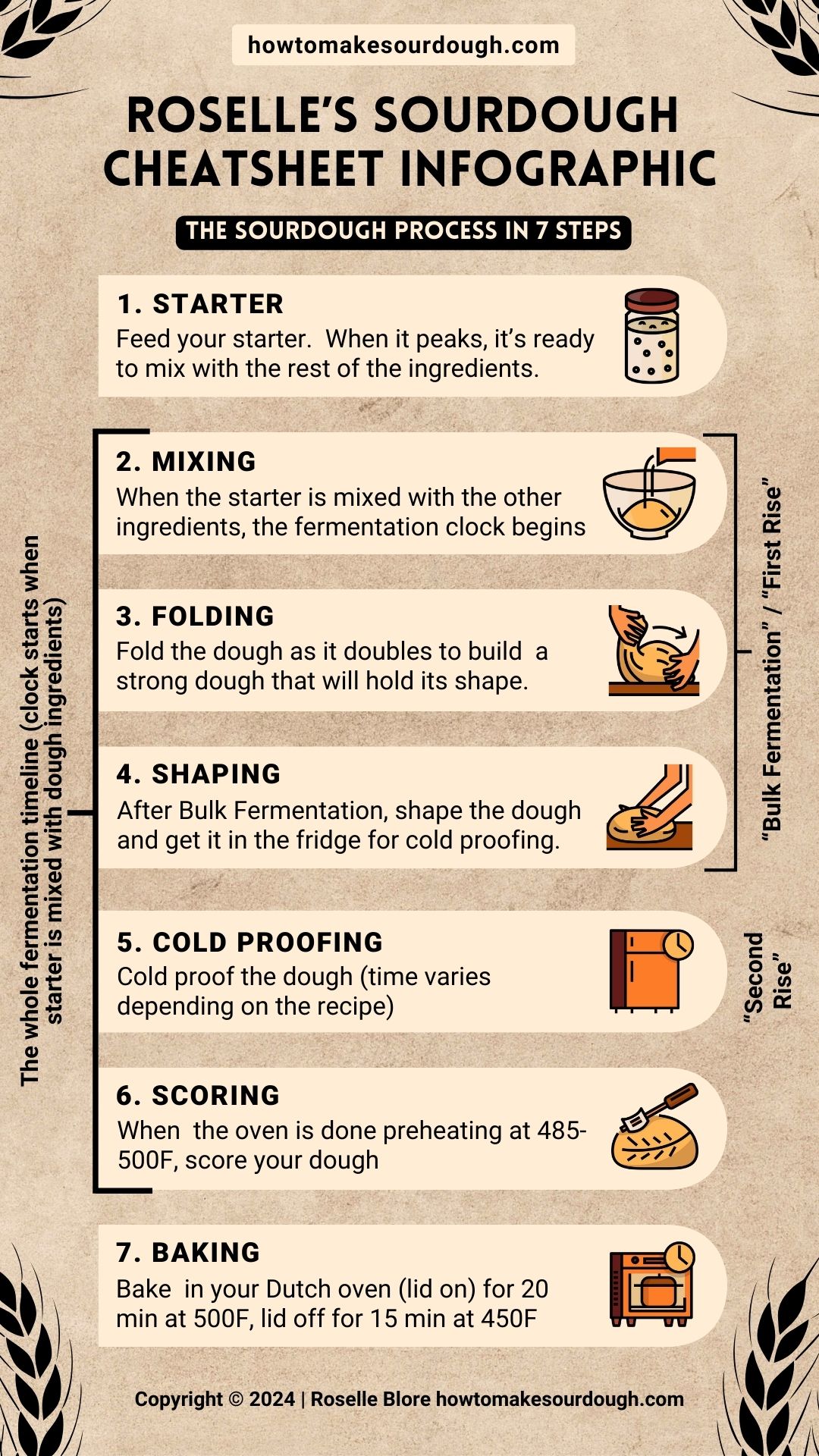
Roselle’s Sourdough Bread Baking Infographic Slideshow

Roselle’s Sourdough Bread Baking Infographic Side 1

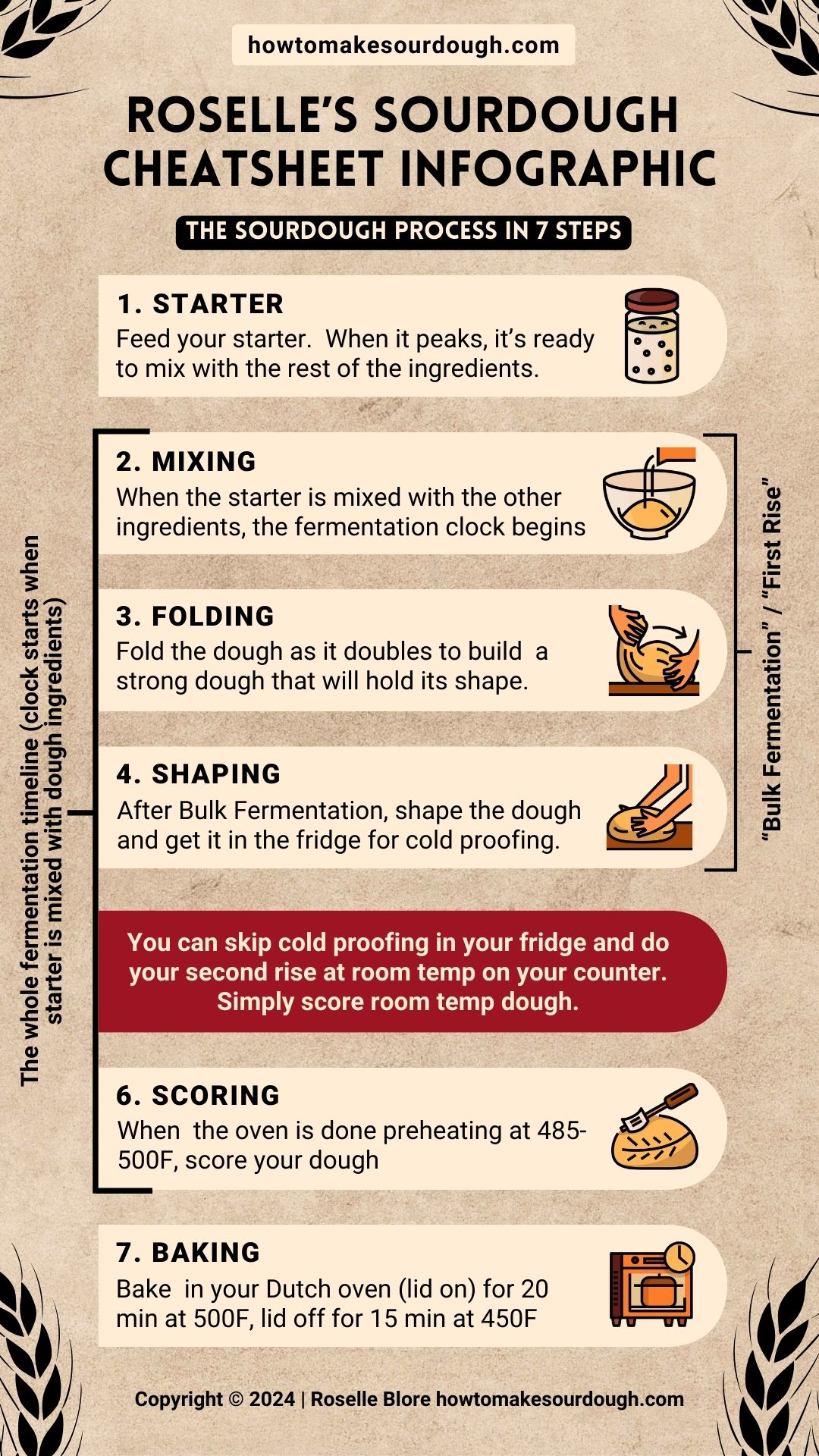
Roselle’s Sourdough Bread Baking Infographic Side 2

Condensing the sourdough process into 7 easy steps:

1. Sourdough Starter

Feed your sourdough starter.

When it peaks, it’s ready to mix with the rest of the ingredients.

👉(Typically 4-8hrs)

2. Mixing your Sourdough dough

As soon as the starter is mixed with the other ingredients, the fermentation clock begins

👉AKA “Bulk Fermentation” Typically 5-6hrs

3. Folding your Sourdough dough

Fold the dough as it rises during bulk fermentation to build a strong dough that will hold its shape.

4. Shaping your Sourdough dough

After bulk fermentation, around the 5-6hr mark for this Country Sourdough bread recipe, shape the dough, put it in your banneton (proofing basket) and get it in the fridge by hour 6.

5. Cold Proof your Sourdough dough

👉AKA “Cold Retard/Second Rise” Typically 12-16+ hrs, depending on the recipe

Cold proof the dough for min 12 hours, max 16 hours

6. Score your Sourdough dough

When the oven is done preheating at 485-500F, score your dough with your lame

7. Baking Sourdough Bread

Bake dough in your Dutch oven (lid on) for 20 min at 485-500F, lid off for 15 min at 450F

Attention:

Steps 2-6 is the ENTIRE fermentation timeline (bulk proofing PLUS cold proofing)

Cold proofing is optional –you can skip it entirely if you want to bake sourdough bread sooner rather than later.

All you have to do is:

After shaping your sourdough dough and putting into your banneton, simply leave it out at room temp for 2-3 hours then follow the rest of the steps.

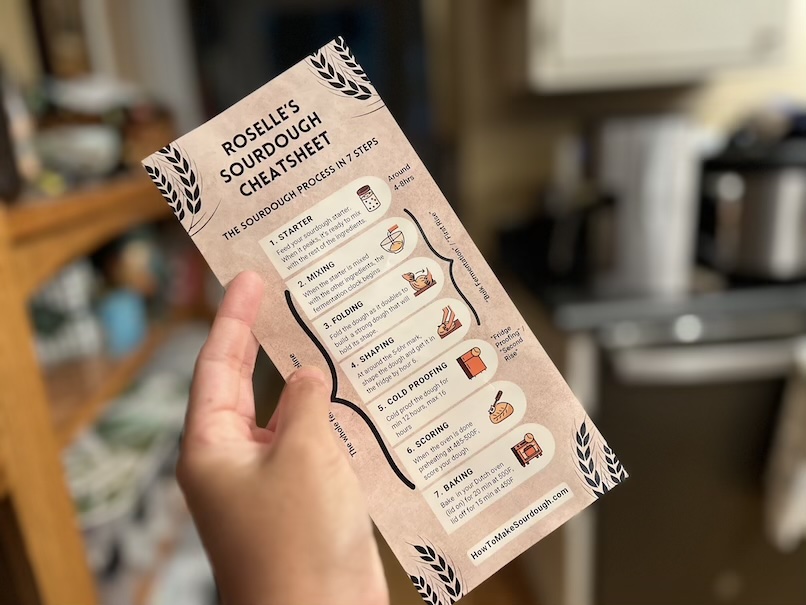
The physical Sourdough Baking Cheatsheet infographic comes included (physically mailed to you) with all of my sourdough courses.

Want this infographic physically mailed to you?

This infographic plus 3 recipe cards from my sourdough bakery is included (physically mailed to you) when you buy the Sourdough For Beginners Course

Filed Under: Sourdough Bread Tips, Sourdough Tutorials

Free Tutorial: How To Make Sourdough Bread

August 7, 2024 by admin 1 Comment

The Sourdough Baking Process

There is really no such thing as a “Sourdough Bread Recipe”.

There are

  1. the ingredients, and then there is
  2. the method —the process.

There are several stages and different steps that take a dough from a blob to a taught dough that holds its shape.

Once you wrap your head around the processes of sourdough bread baking, you can deconstruct any “sourdough recipe” online.

When you know the structure of a sourdough bread, any sourdough bread recipe will make sense to you.

In the most simplest explanation…

Sourdough bread baking is just

  • add your starter to your ingredients,
  • let the dough ferment until it’s almost double in size,
  • shape it and then,
  • bake it.

This is literally what the “no-knead” or “overnight” method is.

It’s the lazy man’s sourdough —where you mix everything and don’t do anything until the very end.

If you choose to make bread this way, that’s literally all there is —mix, wait, shape and bake.

Is it too good to be true? Lazy-man’s sourdough?

You can take your chances with the no-knead / overnight method. It’s worthwhile to do at least once.

But just like everything in life, nothing is as easy as it seams. There is no free lunch.

If you can make the “no-knead” or “over-night” sourdough method work for you —more power to you!

I would do it if you’re in a pinch and need bread but don’t have time to do all the steps.

If you want to know the full process in detail, keep reading…

Stage 1 – Preparation

Okay! Let’s make sourdough!

Note: This is the method of making sourdough. The process remains the same whichever sourdough loaf you are making, so any sourdough bread recipe will apply. The pictures in this tutorial were from me making Country Sourdough. So if you want to bake along with me, get the ingredients list for Country Sourdough here.

This stage takes roughly 4-5hrs at 70-72F.

You don’t have to be home during this time.

Step 1 – Prepare the sourdough starter

ATTENTION: If you do not have a sourdough starter yet, you have two options here:

  1. make a sourdough starter from scratch (takes 14 days), OR
  2. buy my sourdough starter (ready in 2-3 days)

We will need 100g of sourdough starter to leaven this dough

So in a new container, mix

– 50g of your active starter,

– 50g of flour

– 50g of water

Your starter’s peaked when it’s doubled in size and still has a dome on top. Once the dome has deflated, it’s no longer at peak.

If there is no dome and you can see a line where it started to sink back down, it’s definitely not at peak anymore.

You can still use a starter that’s not at peak, it just means your starter isn’t as active and might take longer to ferment. It will also taste very sour.

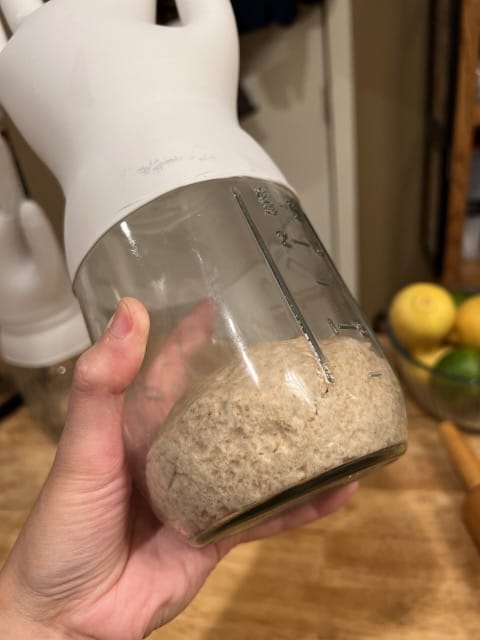
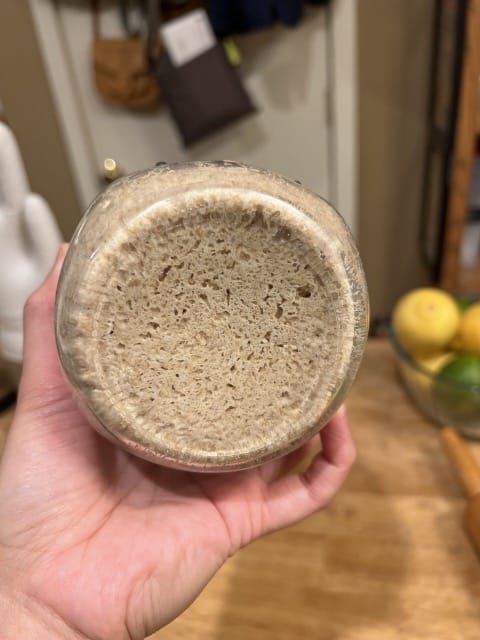
My starter at peak activity, notice the dome.
A glass jar lets you see the bubble activity. When the bottom looks like this, it’s a good sign.

While we are waiting for this to come to peak (~4hrs at 74F), let’s autolyse the dough.

Step 2 – Autolyse your dough for 2-4hrs (optional)

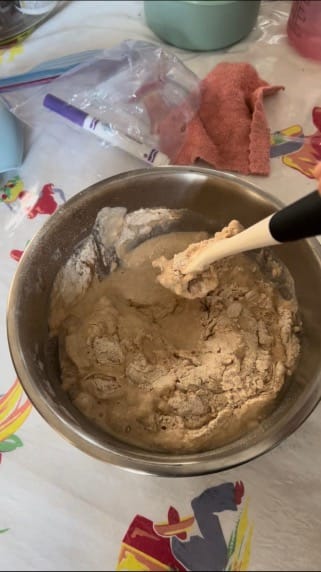
Mix your dry ingredients into your wet, leaving out the starter. We’ll mix that in later. Make sure everything is incorporated. Let the dough rest for 15 minutes.

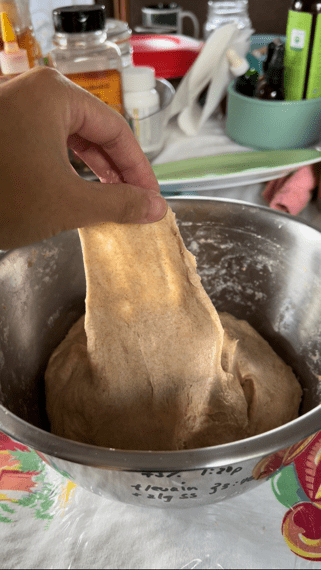
After 15 minutes, your dough should be easier to work with. It should have developed enough gluten strength to develop a windowpane (you can see through it if stretched really thin).

Mix your dry ingredients into your wet. Doing it this way and not the other way around will give you an even mix.
Mix it well and then let sit for 15 minutes.
Stretch your dough to see if it has a windowpane. This is a sign of gluten development.


Start folding the dough into itself. Fold it as many times as the dough will allow without tearing. ⤵️

Then, let the dough rest for 2-4hrs. This is called autolyse. You’re letting the dough develop strength before you mix in your starter.

It gives your dough a head start.

That’s because as soon as your starter is mixed into your dough, the clock starts. Your dough will now start to ferment.

Autolysing helps us start our fermentation with an already-strong dough.

It is completely optional.

You don’t need to do this. You can just mix everything all at once.

Autolyse is especially helpful when you are making HIGH hydration doughs (anything over 72% hydration).

Stage 2 – Bulk Fermentation

Bulk fermentation starts once you mix your starter with your dough.

For “Country Sourdough”, you’ve got roughly 7 hours to turn your dough from a blob that spreads out, into a springy dough that holds its shape. Any more than 7 hours, you run the risk of over-fermenting.

Getting your fermentation times correct is a skill that will come with time and repetition. Once you’ve baked multiple loaves in a row, you will get the hang of it.

You will be able to guess your fermentation times pretty easily.

It’s wholly dependent on how active your starter is, how much starter you are using and the temperature of your dough.

Prepare to be at home during this time.

Step 1 – Combine your sourdough starter into your dough

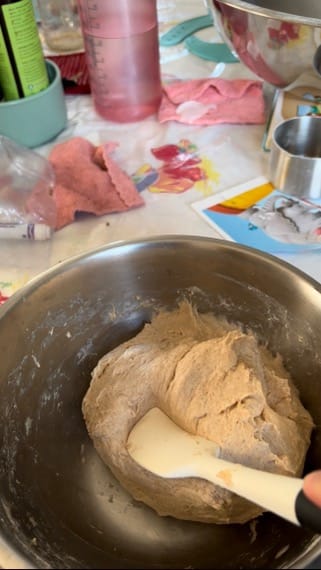
Once your starter’s come to peak, gently combine it into your dough.

You are not mixing.

You are kind of just folding the starter into the dough and mushing it around with your fingers/spatula.

If you mix rapidly, you’ll tear all the gluten development you’ve built during autolyse.

You want to fold and mush, fold and mush, until the starter is completely absorbed by the dough. It takes me 5 or 7 minutes to do this by hand.

How do you know when you’re done?

It helps if your starter is a different color from your dough. My starter is a rye starter, so it’s dark brown/grey and it contrasts starkly against my dough. It’s a good visual aid.

If you don’t have this visual aid, you’re going to have to go by feel. Your starter has a different texture from your dough, so you will be able to feel it when it’s not incorporated enough.

The moment your starter is mixed with your dough, the bacteria and yeasts will start to ferment the dough. You are now on the clock.

Step 2 – Dough Strengthening/Folding

During this fermentation process, it’s the baker’s job to develop the gluten network and strengthen the dough.

You need to transform that dough from a blob that spreads out, into a springy dough that holds its shape.

Basically, you need to knead the dough.

You fold the dough as many times as it will allow before it starts to tear. Then, you let the dough rest for 30 min to 1 hr (it will spread out again).

Then you do your series of folds again. Careful to stop as soon as you feel the dough resisting. Careful not to tear.

Repeat this until you’re nearing the end of your fermentation time (roughly 5-7hrs at 74F —less time if warmer, more time if colder).

You might be able to get in 2-3 folding sessions before it’s time to shape the dough and put in a banneton (or any other round/oval bowl) for its final proofing.

There are many ways to knead dough, and the techniques differ depending on what you want to achieve. But generally speaking, they are all basically a form of folding the dough into itself. The more folds you get in, the stronger your dough is.

Here’s a few of my favorite folding techniques:

Stretch and Folds ⤵️

Stretch and folds are an oldie, but goodie type of dough strengthening.

Basically, you grab a corner, stretch it ’til it can’t, and then fold it on top.

Do it over and over, clockwise, until the dough starts resisting. Careful not to tear the dough.

Let the dough rest 20-30 minutes before you do another series of stretch and folds.

If the dough is sticking to your fingers, wet your hands. It helps if you do this next to your sink or bowl of water.

Coil Folds ⤵️

See how wet this dough is? This is a very high-hydration dough, 80%.

With high-hydration doughs, it’s even more important to develop dough strength because there is just so much water weighing the dough down.

Coil folds are a really good way to achieve that.

Stretch and folds give you 1 fold with each rotation, whereas coil folds give you double that.

Tuck and Roll Fold ⤵️

If you are doing multiple loaves at once, like I am here in this video, the tuck and roll fold is a good choice.

I like that it lets you get in A LOT of folds in one rotation. I didn’t count how many folds I was able to do in this video, but it’s a lot.

Watch how this dough transforms in just 2 minutes.

P.S. You can do this for single loaves too, especially if your dough is really extensible (stretchy but not strong)

Lamination ⤵️

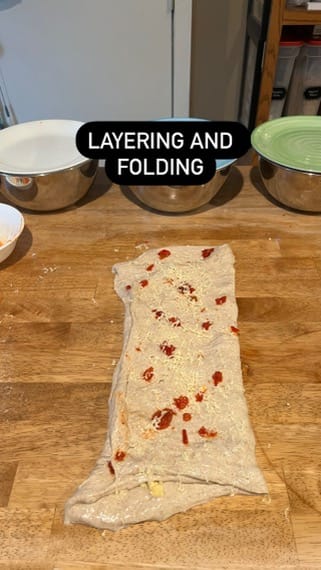
This folding technique is when you stretch out your dough (as far and thin as it will allow before tearing) and fold as many times as it will allow you (without tearing).

You want to stretch from the center of the dough, and not the corners.

And make sure you lightly water your work surface and your hands. Otherwise, your dough will stick everywhere.

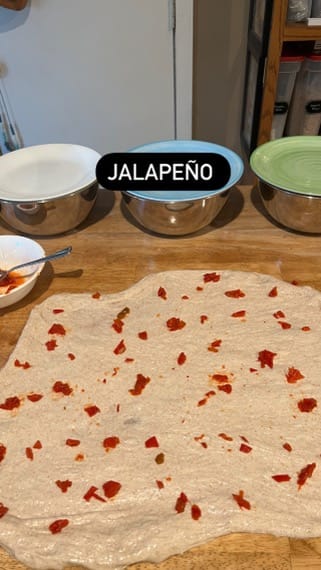
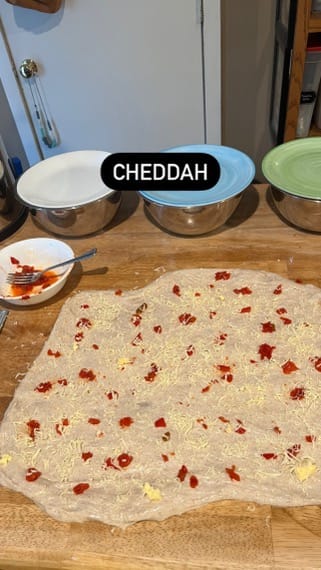
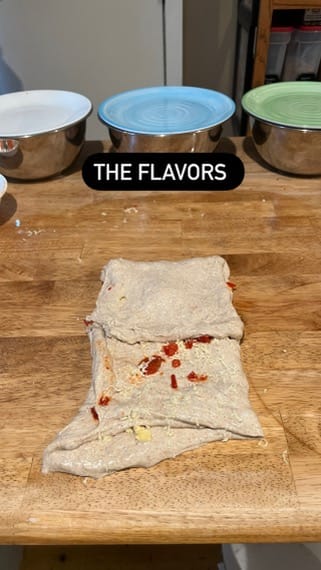
This folding technique is particularly helpful if you want to add toppings to your dough. It will distribute your toppings/flavors evenly with each and every fold.

For example, see how I added jalapeños and cheddar in the pics below:

Folding Techniques Recap

You can choose to do just one technique or a combination of techniques, it’s up to you. They are all fun to do and worthwhile to practice.

I used to do a combination of stretch and folds, then lamination, then coil folds —but lately, I’ve been really liking just doing tuck and rolls. So much easier and less time consuming. Plus, it’s what they do in professional bakeries, so if it’s good enough for them, it’s good enough for me!


Step 3 – Shaping

Okay, after the 6hr mark, it’s time to start shaping.

Shaping is what you need to do before you put the dough in a banneton (or any round/oval bowl) to do its final proof.

Shaping is just a series of rapid folding to make the dough super-taught. Then you put the dough in a bowl for the remainder of its fermentation process. In there, your dough will continue to double in size. By the time it’s ready for baking, you take it out of the banneton, and hopefully, you’ve built enough dough strength that it will hold its shape.

You can shape your dough into a boule (round) or a batard (oval). I prefer batards for daily bread and boules for bread bowls.

Here’s how I shape my bread:

 For high-hydration doughs, I like to do an envelope fold, then stitch, then tuck and roll. Pinch the sides to make a seam.

If envelope folds aren’t for you, here’s another technique:

Tri-fold, then tuck and roll. Pinch the sides to make a seam. 

Step 4 – Final Proofing

Hooray, we’re nearly there!

After shaping, it’s time for final proofing.

If you need to bake right away, let your dough final proof at room temp up until almost the end of fermentation (around the 7hr mark), then stick it in the freezer for 30 min to 1 hr.

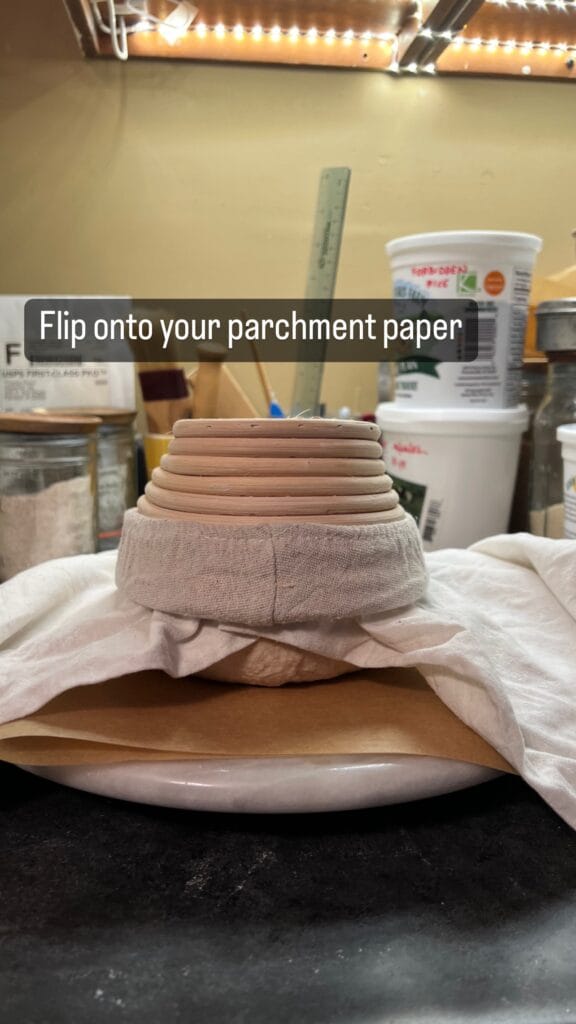
Then, take it out of the freezer, flip it out of your banneton onto a parchment paper, score it, and then bake it.

If you go over 7hrs, you run the risk of over-fermentation. You will see your dough deflate and start to disintegrate into a sticky blob. It has essentially become a gigantic starter.

Cold Retard – preferred method

If you don’t have to bake right away, final proof your dough in the fridge for a 12-16hrs cold retard.

This is what I do.

Your dough will continue to ferment and double in size in the fridge, just really really slowly.

During this time, the dough will have some time to develop flavors. Just like how soup gets better in the fridge a few days later.

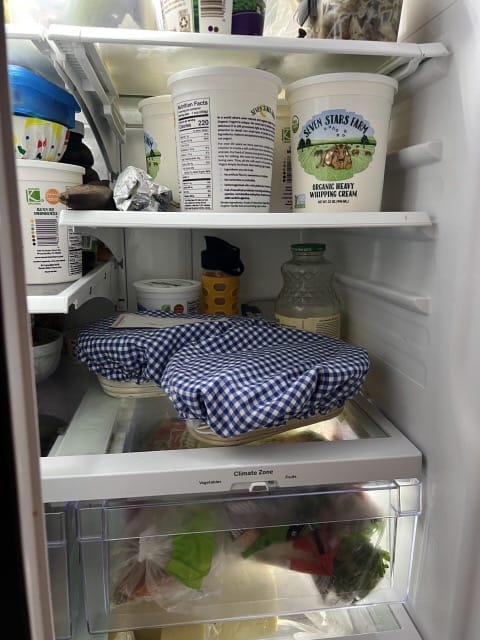
If you decide to do this, start shaping your dough at around 6hr mark (from the time you’ve mixed your starter with your dough) —making sure you get in as many folds before then. Put it in your banneton, and then place it in the coldest part of your fridge —away from the door and surrounded by other cold things.

Since we put it in the fridge at around the 6hr mark in the fermentation process, I’d say you can leave this in the fridge for 16hrs max.

Any longer than that, you run the risk of over-fermentation.

Doughs cold proofing in my fridge
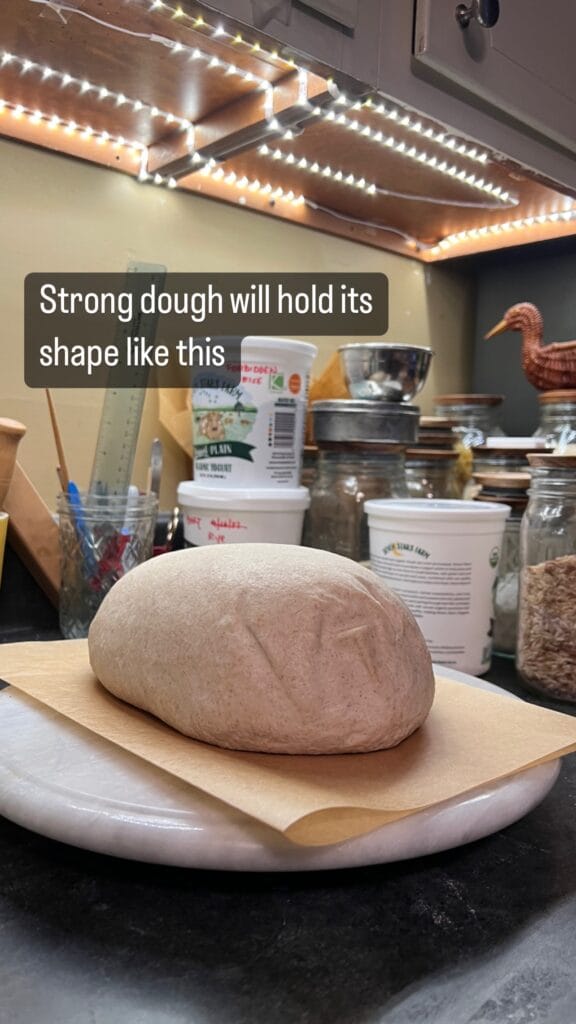
Strong dough, holding its shape well

Stage 3 – Scoring and Baking

Okay, after final proofing your dough, whether it’s at room temp or in your fridge, there’s a few guidelines with baking the dough:

SCORING

The dough releases steam during baking. —and you know how water will always find the path of least resistance?

Well, the water in the dough will find where the gluten is the weakest (usually the bottom sides) and will blow out through there.

This is why you MUST score your dough before putting it in the oven.

There are two types of scores:

1) the expansion score (or functional score) —which is necessary, and

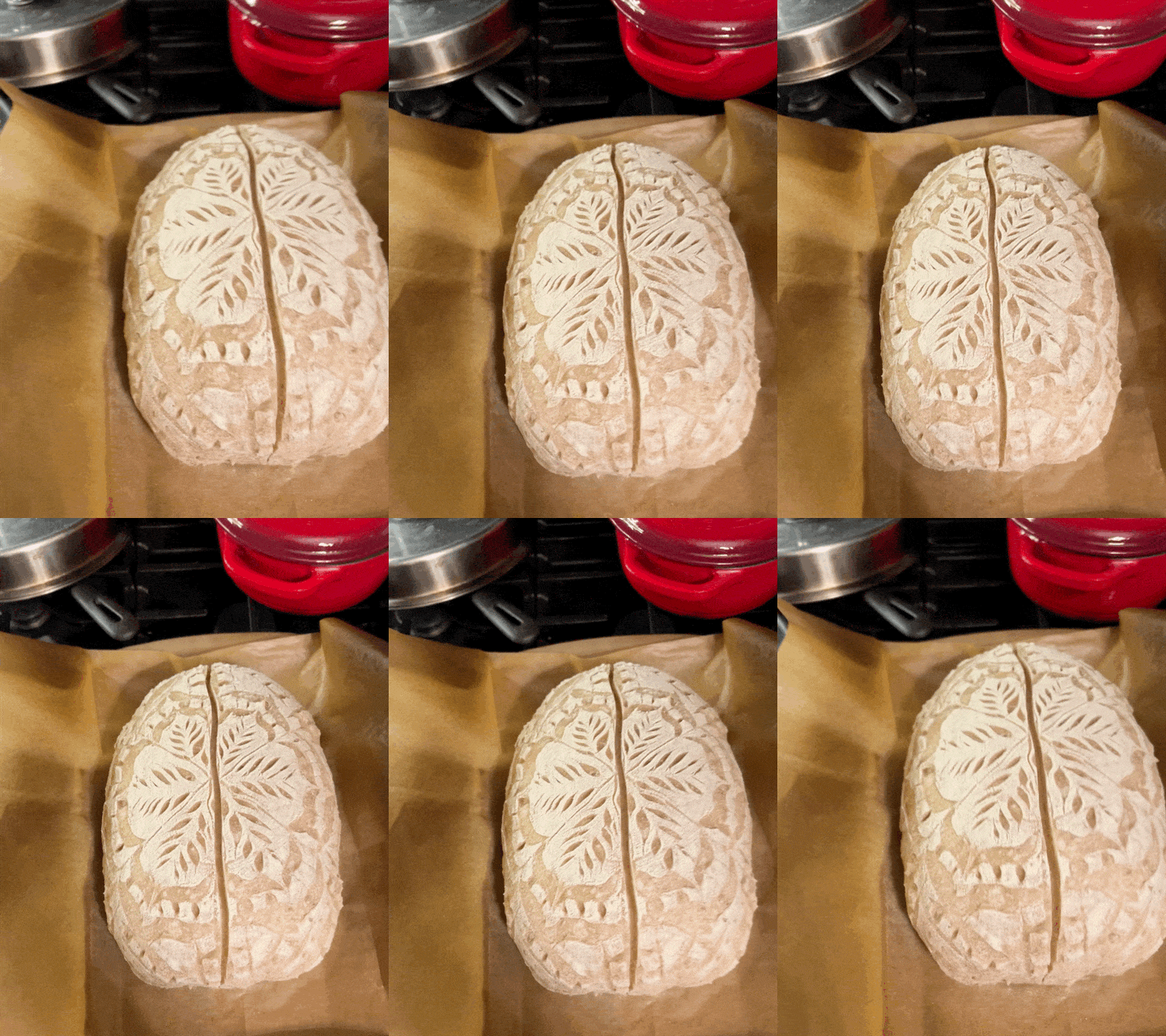
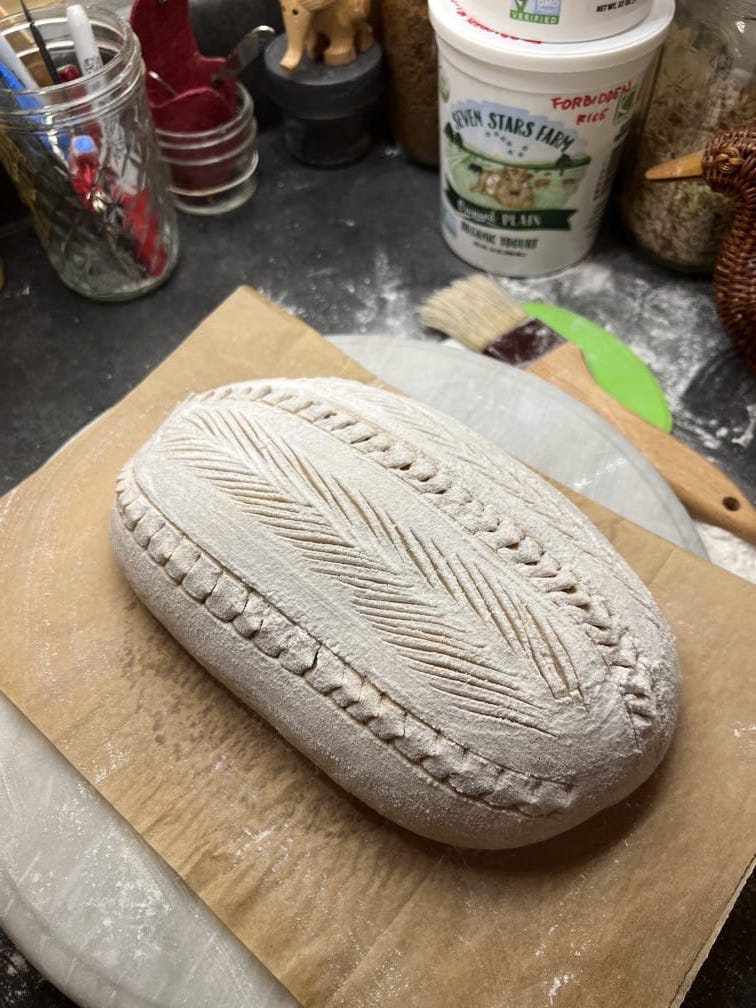
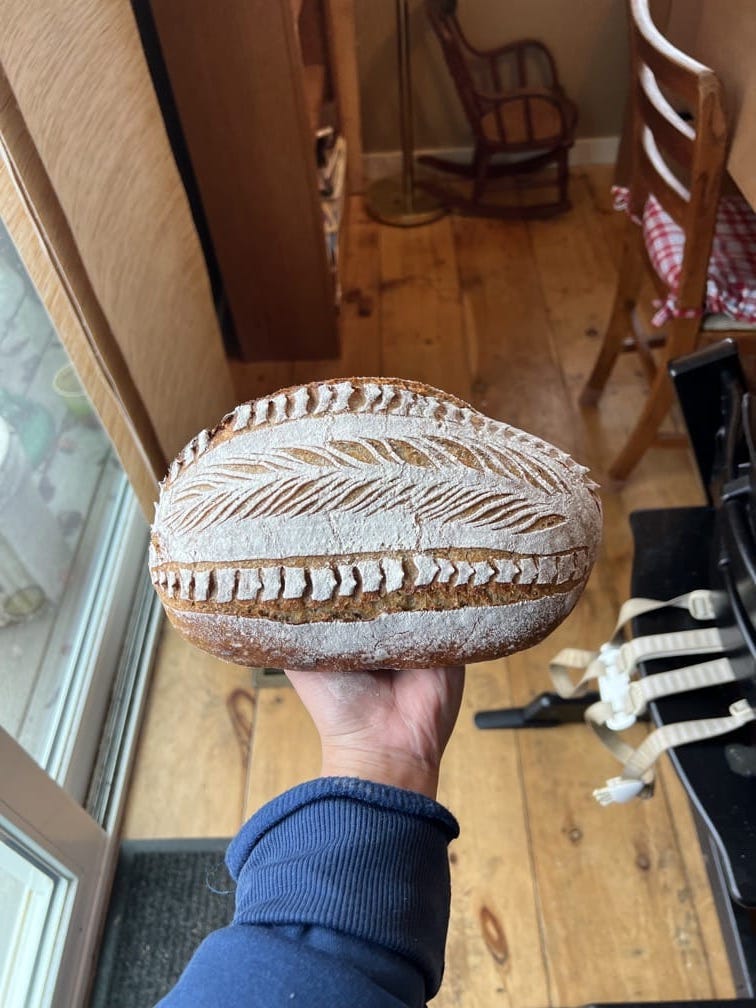
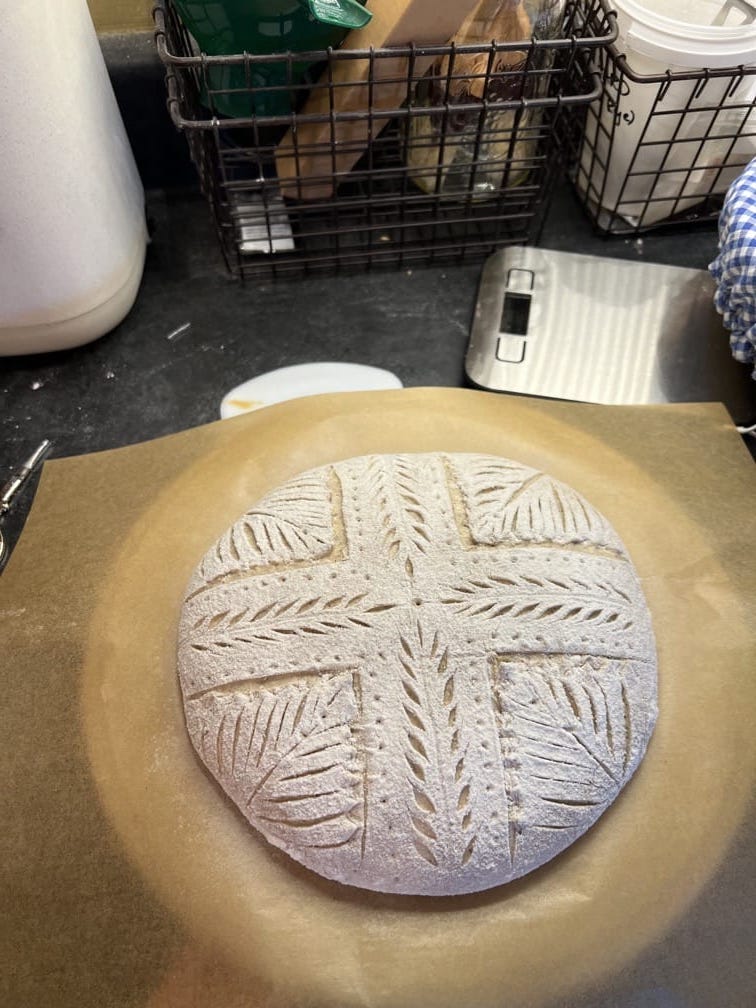
2) decorative scores —completely optional, but fun to do. If you decide to do this, make sure you still do an expansion score.

Expansion score
Decorative scoring with an expansion score down the middle

Expansion scores

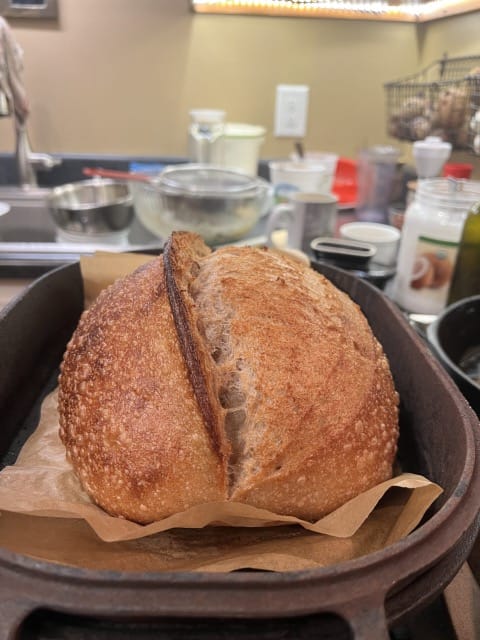
When you do these scores, you can control where that steam vents. So instead of having an ugly blow out, you have this very nice expansion score that lets the dough rise in the oven evenly and beautifully (ovenspring), producing something called an ear.

When the ear looks good, it means you did your expansion score well.
If the ear is too thick, it means you scored too deeply and at a bad angle.
I like the ear on this one the best. The ear is thinner.
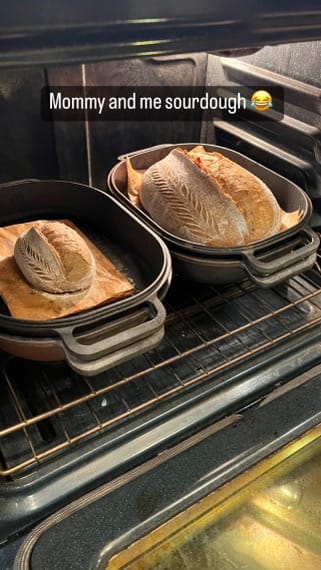
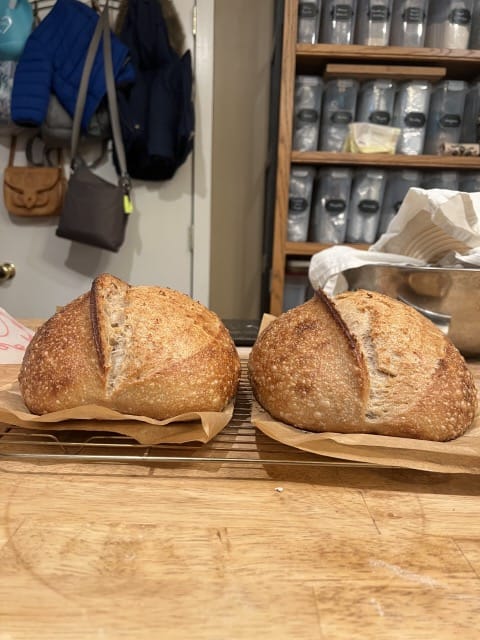
The ears on this mommy and me sourdough look so cute together!
Even with toppings, your ear can look good, like this ☝️
The expansion score is a main component for a good rise.

How to do your expansion score

To get an ear like in the pics above,

visually mark the middle of your dough.

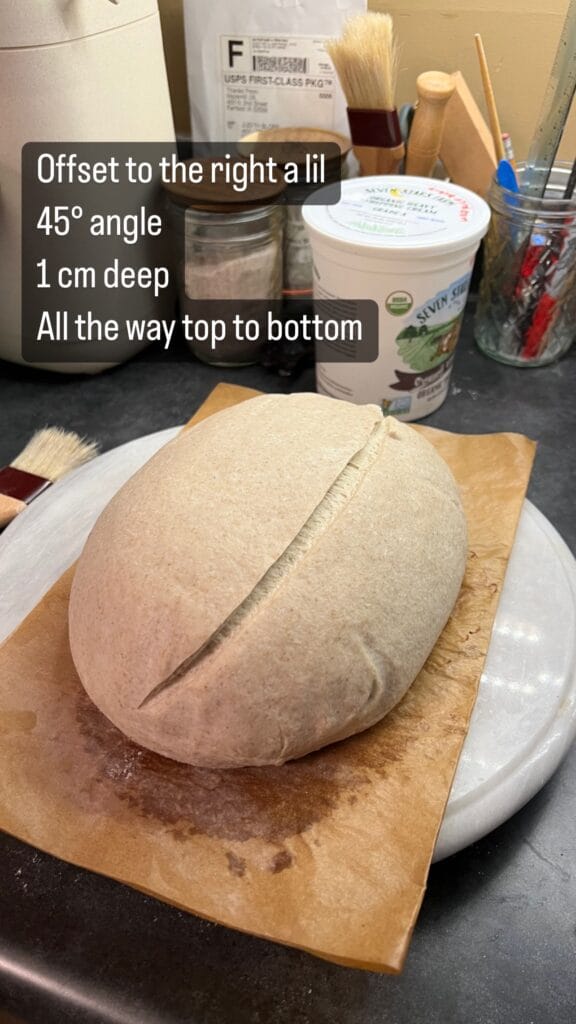
You’re going to place your razor at the top of the dough, in the middle.

Hold your razor at a 45 degree angle, not straight down.

From top middle to bottom middle, use your razor to slice into your dough, at a curve (not a straight line), 1cm to 1 ½ cm deep.

Scoring angle

You’re going to score from the very top to the very bottom, at a curve, not straight down the middle, like this.

Technically, you can score at any angle.

But I prefer to score at a curve, because then you can get maximum ovenspring and you get a nice ear.

Decorative scoring

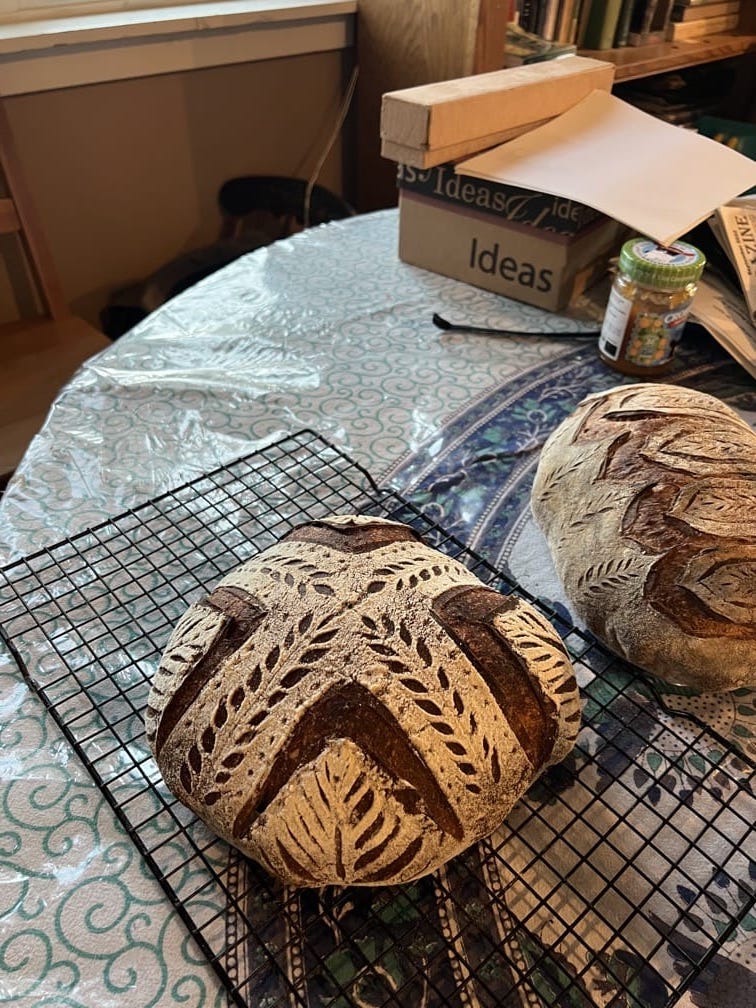
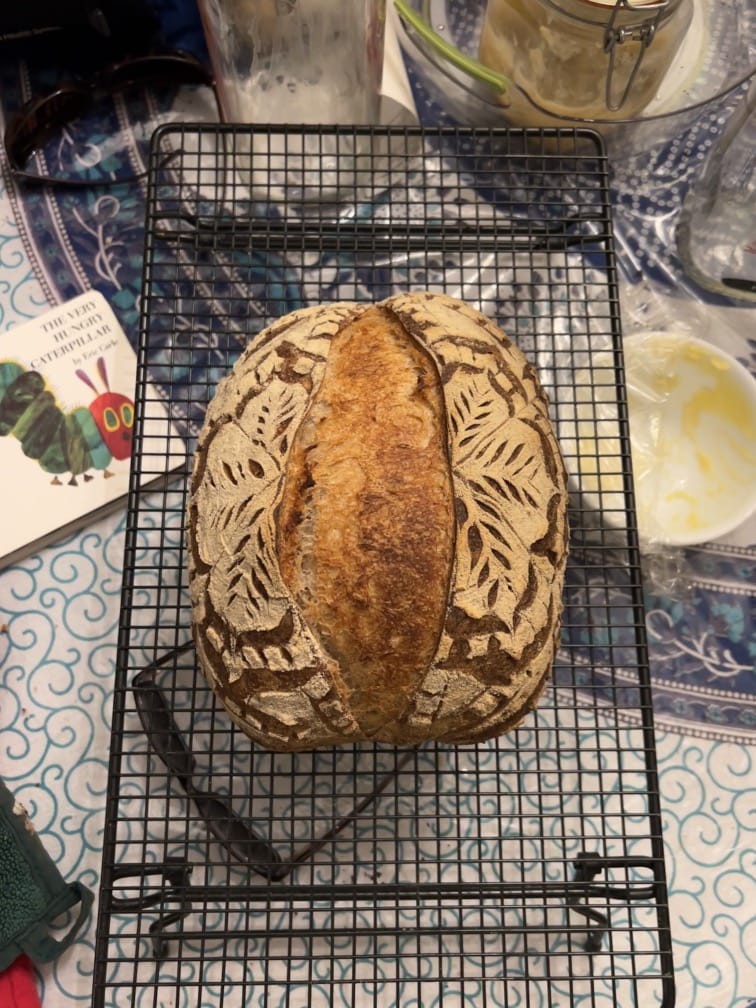
If you want to have a little fun and decorate your loaf, you can do intricate, artistic scores.

Here’s a few pics on some decorative scores I’ve done.

Watch me do decorative scoring

Now that you can see the different types of scoring possible, watch me do it in real time.

For today’s country sourdough, I decided to go simple and just do leaves. I love to watch the leaves expand —it’s so cool!

It took me 6 ½ minutes to do this, check it out.

BAKING

Okay, next step. Time to bake!

Sourdough bakes best in a Dutch oven and goes through 2 baking steps:

Step 1 – with steam (lid on)

Preheat your oven with your dutch oven inside for at least an 1 hr at 485F.

Flip out your dough on parchment paper, do your scores, and then place it in your dutch oven. Cover it with a lid and bake at 485F for 20 minutes.

The 5 minute score

If you are doing a lot of decorative scoring like I did for this loaf, you do things slightly differently.

Whenever I’m doing lots of detailed scoring, I like to do what’s called, the 5 minute score.

It just means that you let the dough cook 5 minutes in the oven before you do your expansion score.

Cover it with a lid and bake at 485F for the remainder of the 20 minutes.

Step 2 – without steam (lid off)

After 20 minutes, it’s the moment of truth.

Take the lid off your dutch oven and look at your bread. The insides are done cooking.

Now we bake it in our dutch oven uncovered for another 10-20 minutes at 440F to develop the crust. The longer you bake it, the darker and harder your crust will be.

Final Reveal

After 10 minutes at 440F, this is how my bread came out looking:

Country Sourdough Reveal

I like the golden crust color.

If you want a dark artisan loaf look, bake it uncovered for another 5-10.

Wait 2hrs before you cut into it

Just like how you would let steak rest before eating, let your bread set for at least 2hrs. It’ll continue to cook as it comes down to room temp, and dry out any excess moisture.

Baking Recap

When we bake our dough with the dutch oven cover on, we trap in the steam. The more steam, the bigger your rise will be. It also prevents the crust from cooking before the rest of the dough can. By the time your dough is baking in steam for 20 minutes, the bread is done cooking.

Then we bake with the cover off.

The second half of baking is to develop your crust. The longer you bake it, the darker and harder your crust will be.

Troubleshooting your bread

Wait at least 2hrs before slicing your bread.

If you want to see how you did, cut the bread in half, straight down the middle, so that you can inspect your crumb (how your bubbles look).

Your crumb gives you insight on how your fermentation went. And since fermentation is what you really want to get on point, it’d be good to take a closer look.

Big, uneven holes with no rhyme or reason suggest under-fermentation.

A flatter bread with tiny holes spaced tightly together suggest over-fermentation, or you used flours with almost no gluten (einkorn, spelt, rye, etc.) —those need special instructions.

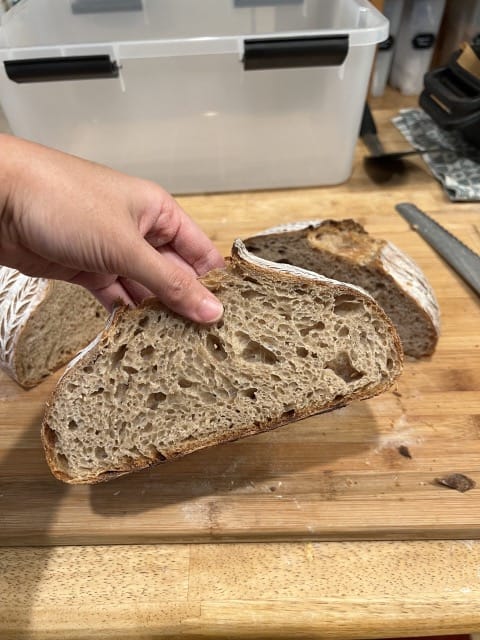
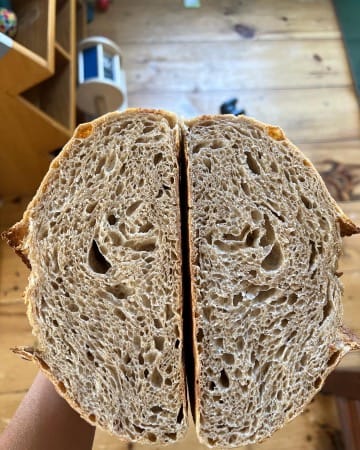
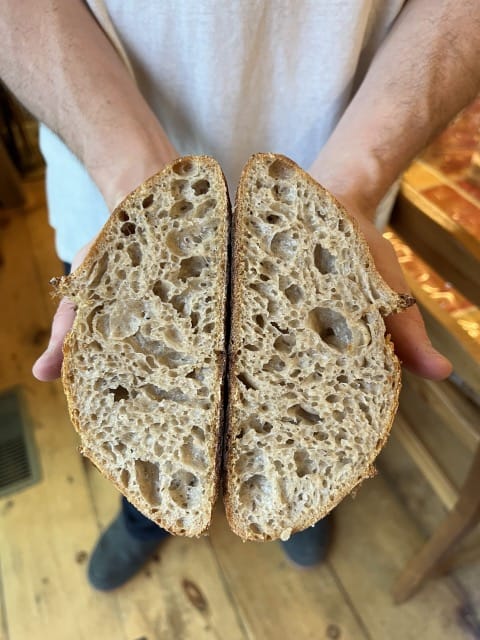
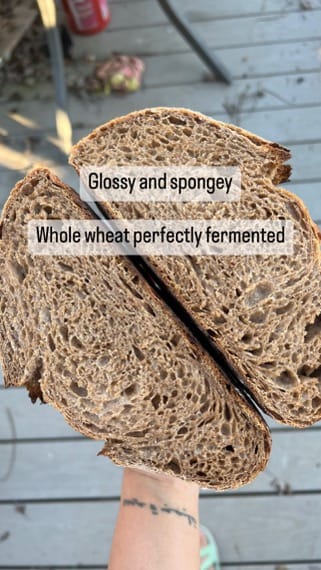
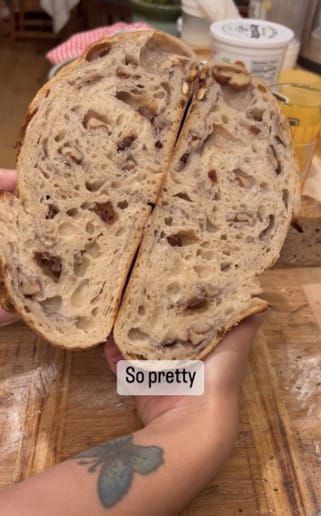
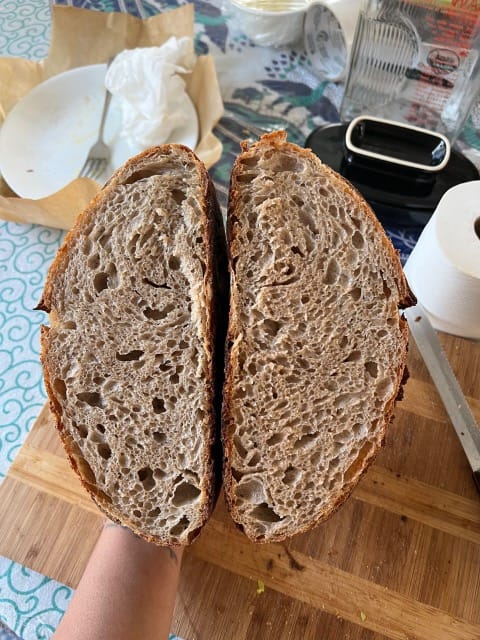
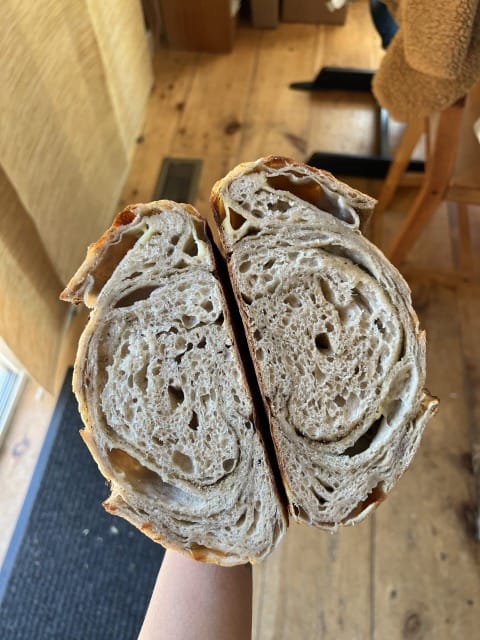
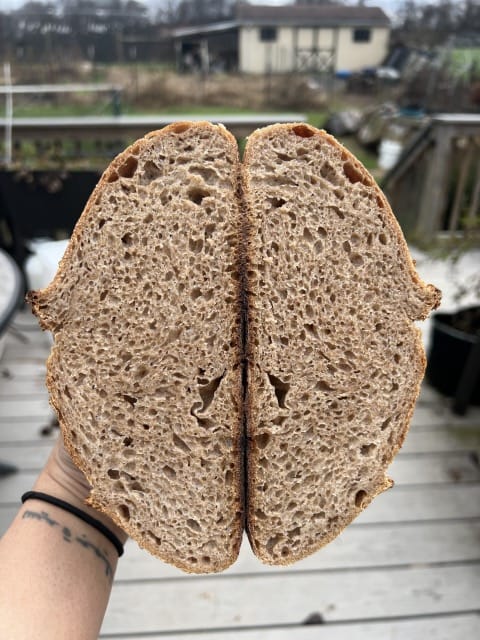
I am chasing what is called an, “open crumb.” Bigger holes with a nice pattern. Here’s a compilation of my best crumbs:

The first open crumb I was proud of
I lost a lot of butter in these holes
Perfect open crumb pattern on whole wheat
Cranberry walnut open crumb
Great open crumb pattern too
Rosemary garlic parmesan sourdough
Another great whole wheat crumb, albeit a little tight
Cheddar jalapeno, big pockets, but that’s because I added so much cheese


Whatever the outcome, be proud, take pics and write notes.

Baking and leavening things naturally is a skill. And it’s fun!

Please take a moment to follow me on instagram: https://instagram.com/howtomakesourdough

And share with all your sourdough baking friends!

Thank you,

Roselle

Filed Under: Sourdough Tutorials

How To Make Sourdough Starter

August 4, 2024 by admin 7 Comments

Find out how to make a starter from scratch, what to feed it, how many times to feed it, where to keep it and how to use it in sourdough bread recipes…

We are going to build a sourdough starter from scratch. The more you feed a starter, the more active it will be.

We’re going to feed your starter once a day over the course of 7-14 days —but you can speed up the process if you feed your starter 2x or even 3x a day.

A a general rule of thumb, the more you feed it, the more mature it gets.

In other words, the longer you wait to use it to bake sourdough bread, the better your sourdough bread will be.

So buy enough flour. A 1lb bag should be more than enough to feed your starter this week.

What tools do you need?

Sourdough Starter Kit

Here are my #1 favorite and preferred tools for Sourdough Starters. These are the winners of three years of comparison shopping, research and testing.

Sourdough Starter

Thermometer and Hygrometer

My Favorite Kitchen Scale

Weck Jars

Off-set metal spatula 4.25″

Bread Flour

Dark Rye Flour

Brod & Taylor Proofer

Dough Mat

Use Code ROSELLE10 for 10% OFF

Rubber Bands

Dry Erase Marker

How To Make Your Starter From Scratch

Day 1 / Feeding 1

We’re going to begin with feeding at a ratio of 1 : 1 : 1.

Meaning that, when it’s all said and done, we will be feeding and maintaining your starter at equal parts starter, flour, and water.

starter

flour

water

total

Feeding Ratio

1

1

1

Day 1 / Feeding 1

50g

50g

100g

We don’t have a sourdough starter yet, we’re trying to build one.

So on Day 1, or rather Feeding 1, your are simply mixing 50g of flour and 50g of water in a glass jar.

Thoroughly mix everything, making sure there are no dry clumps of flour. When you think you’ve mixed everything really well, mix just a little more to be sure.

Now, with wet hands, clean the sides of the jar with your fingers and use your knuckles to lightly pound down the starter so that it’s level. Careful you don’t make it concave. You want the starter to be as straight of a level as possible.

Once you have that, put a rubber band over your jar and set it over the starter line, indicating the starting point.

Starters like it warm.

Starters thrive in warmer temperatures. They like it at 77F – 86F. The warmer the environment, the faster your starter will come to peak. Yeast will die if too hot (120-140F), though. So don’t put your starter near your stove or in your oven.

We now wait until it comes to peak.

Day 2 / Feeding 2

starterflourwatertotal
Feeding Ratio111
Day 1 / Feeding 150g50g100g
Day 2 / Feeding 2100g100g100g300g

Alright, it’s a day later. Depending on your flour, you may or may not have seen activity in your jar. You may have seen your starter come to peak and come back down, —or you may have seen zero activity.

It doesn’t matter. Time for feeding #2.

Your starter is now roughly 100g.

At this point, we’re still building up the activity, so we’re not going to discard any starter yet.

So Day 2 / Feeding 2 is simply feed the starter at a 1 : 1 : 1 ratio.

Simply add 100g of flour and 100g of water to your starter.

When it’s come to peak, it’s time to feed it again.

Day 3 / Feeding 3


starterflourwatertotal
Feeding Ratio111
Day 1 / Feeding 150g50g100g
Day 2 / Feeding 2100g100g100g300g
Day 3 / Feeding 3100g100g100g300g

Alright, it’s day 3, or nearly day 3.

Your starter has now built enough activity that we will need to discard starter before every feeding from here on out.

So today, take 100g of your starter (discard the rest) and mix equal parts flour and water.

Wait for it to come to peak before you feed it again.

You repeat this process until you’ve fed your starter a minimum of 7 feedings.

By the end of 7 feeding sessions, your starter is should be good to go.

It’s powerful enough to leaven a loaf of sourdough bread.

But only if the sourdough starter is rising and falling reliably and predictably by this point.

What if the sourdough starter stopped rising sometime between Days 3-7?

This will happen to some people and it’s what’s called the “dead phase” of making a sourdough starter.

The only recourse here is to “keep on keeping on” and continue feedings for 14 days.

You may even want to wait longer between feedings, perhaps 2 days instead of 1 so you can be sure you haven’t missed any activity.

Filed Under: Sourdough Bread Tips, Sourdough Tutorials

How To Make Gluten-Free Sourdough Bread

December 16, 2022 by admin Leave a Comment

Making Gluten-free sourdough is so easy, it’s crazy.

In fact, it’s actually following the “no-knead” or “overnight” method:

You mix everything together, shape, wait and then bake. Done.

Gluten Free Sourdough Bread Recipe

For this GF Sourdough Bread tutorial, we’re going to use my GF Sourdough Bread Recipe Version 1.0 –it’s most similar to whole wheat sandwich bread.

Follow the steps below…

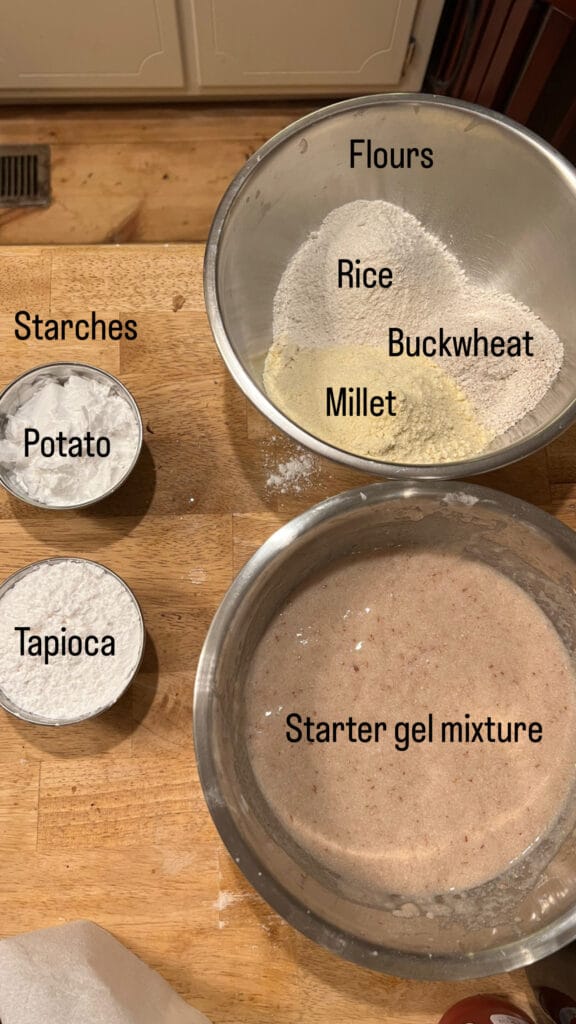
Ingredients / Dough Composition

Flours

PercentagesIngredientsMeasurements
19%Rice100g
28%Millet150g
19%Buckwheat100g

Starches

PercentagesIngredientsMeasurements
14%Tapioca75g
14%Potato75g

Other Dry Ingredients

PercentagesIngredientsMeasurements
2%Salt10g

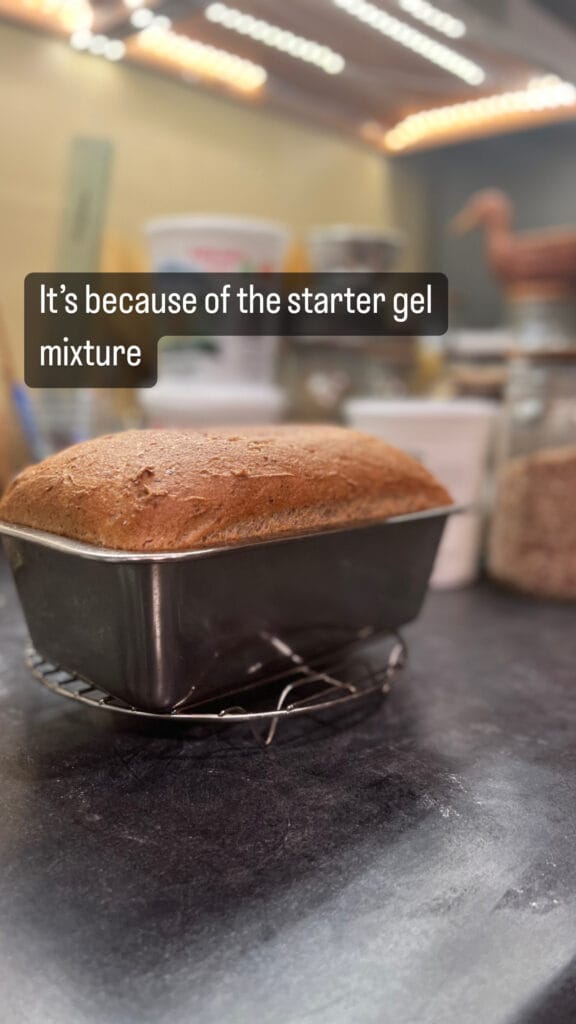
Starter Gel Mixture

PercentagesIngredientsMeasurements
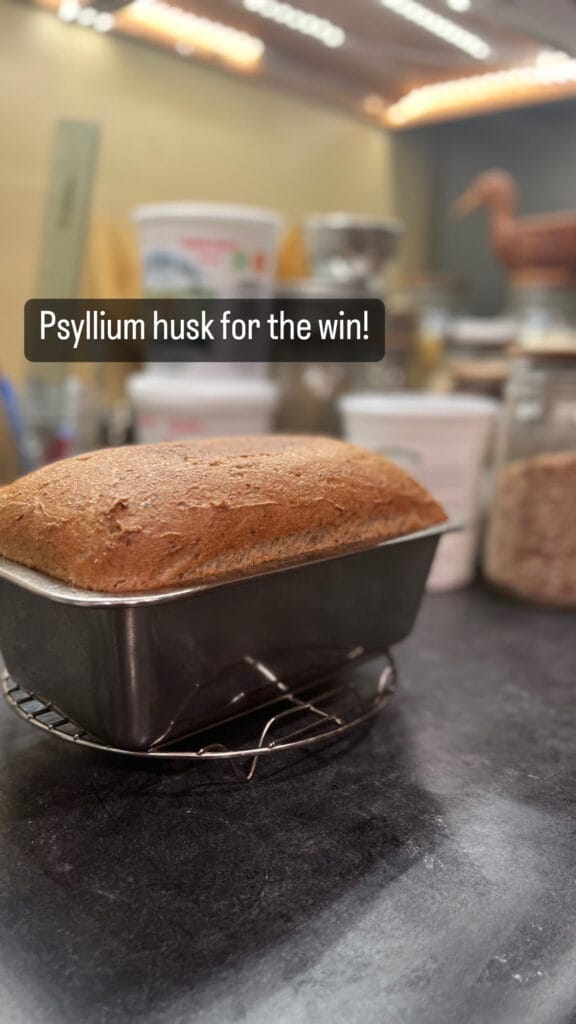
4%Psyllium Husk20g
2%Ground Flax Seed10g
37%Gluten-free starter200g
100%Water540g

Stage 1 – Preparation

Step 1 – Prepare your starter

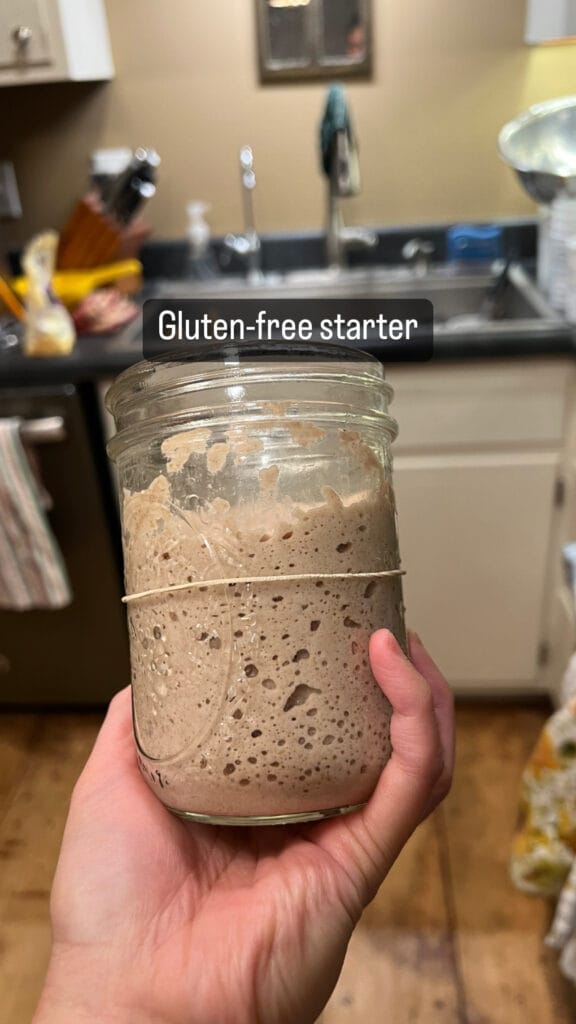
Make sure you’re using a very active gluten-free starter, you might need to feed it 3x before using it.

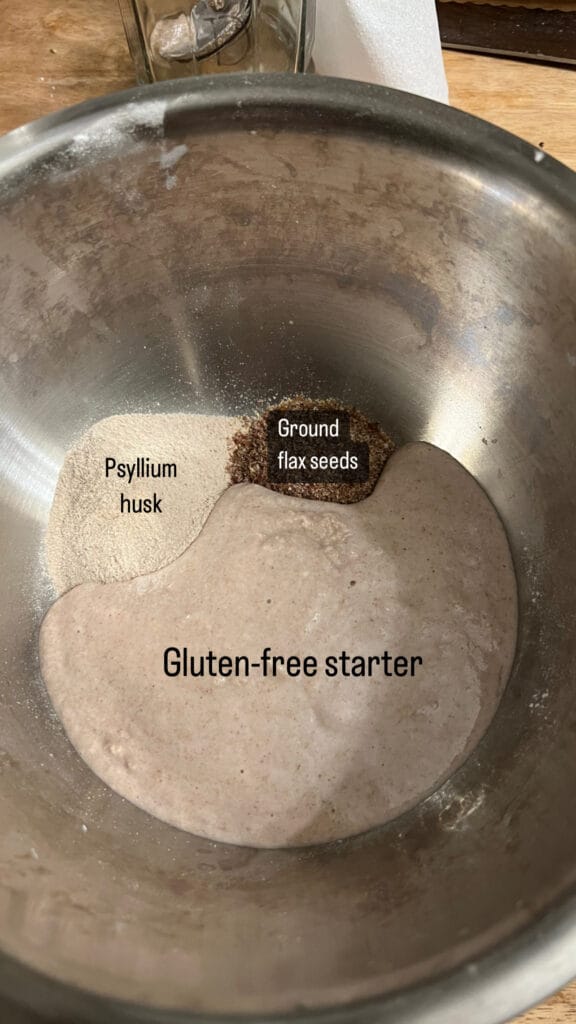
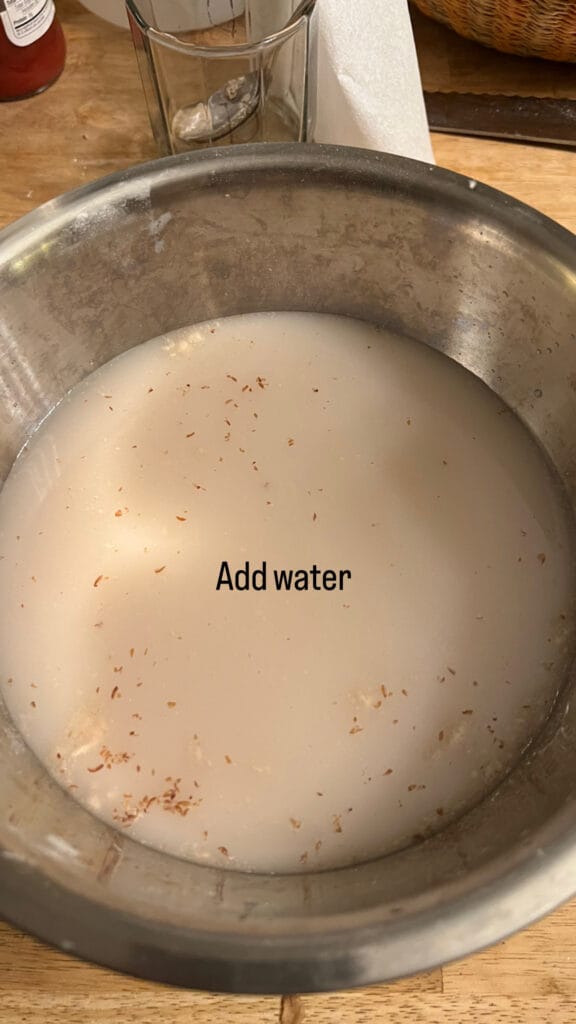
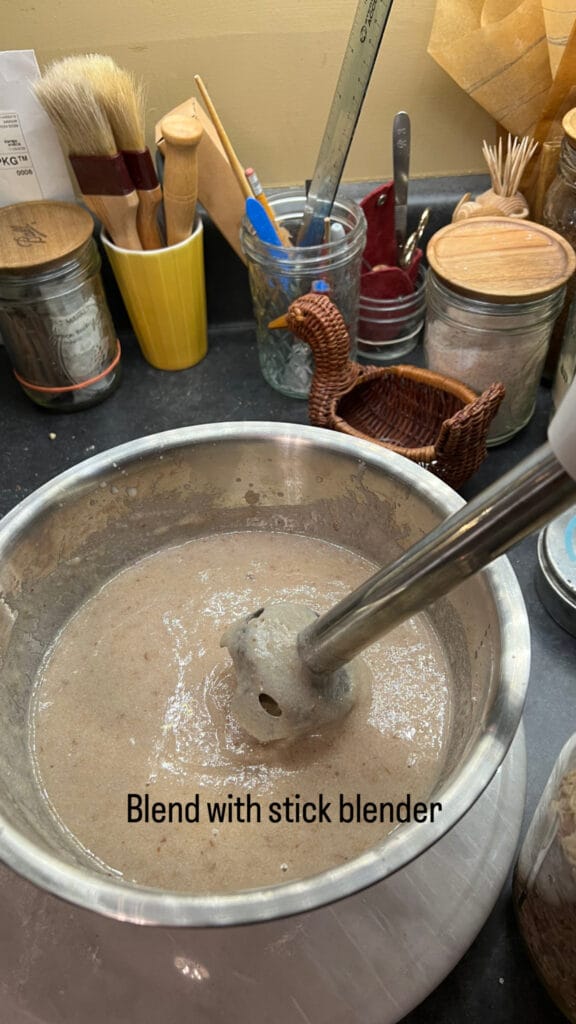
Step 2 – Prepare your starter gel mixture

Mix all the ingredients very well.

It helps if you use a stick blender.

Work quickly, both psyllium husk and flaxseed gel pretty fast.

Do I need a stick blender?

You want to mix this as evenly as you can. That’s why I use a stick blender. A regular blender is good too.

When I didn’t use a blender, the starter gel came out sooooo clumpy. I gave up breaking up the clumps and proceeded anyway. It’ll still work, but you wont get the best outcome.

The blender (stick or regular) also adds air into the starter gel mixture, so that’s always a good thing with anything gluten-free.

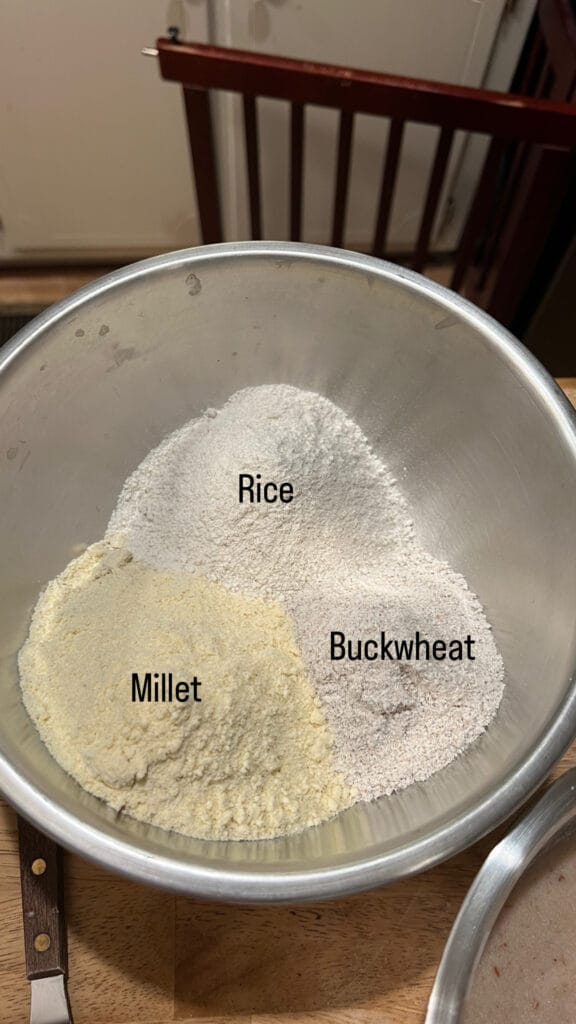
Step 3 – Prepare your dry ingredients

Mix all of your dry ingredients together.

Watch out for the starches, they tend to clump together and jump out of their containers, so be careful dumping them into your bowl.

Also, remember the salt!

Stage 2 – Bulk Fermentation

Step 1 – Mix your dry ingredients into your wet

Combine everything, making sure there are no dry clumps of flour.

I mix in a big stainless steel bowl, using a plastic bench scraper to “chop in” the dry flour into hydrated dough.

Step 2 – Knead the dough

There will come a time where it wont mix together comfortably in your bowl anymore, so flip the whole thing out on your counter.

Knead the dough by folding it into itself a few times.

Then, leave it alone for 30 min.

Step 3 – Shape your dough, oil your pan

Shape the dough into a log by folding it into itself a few times.

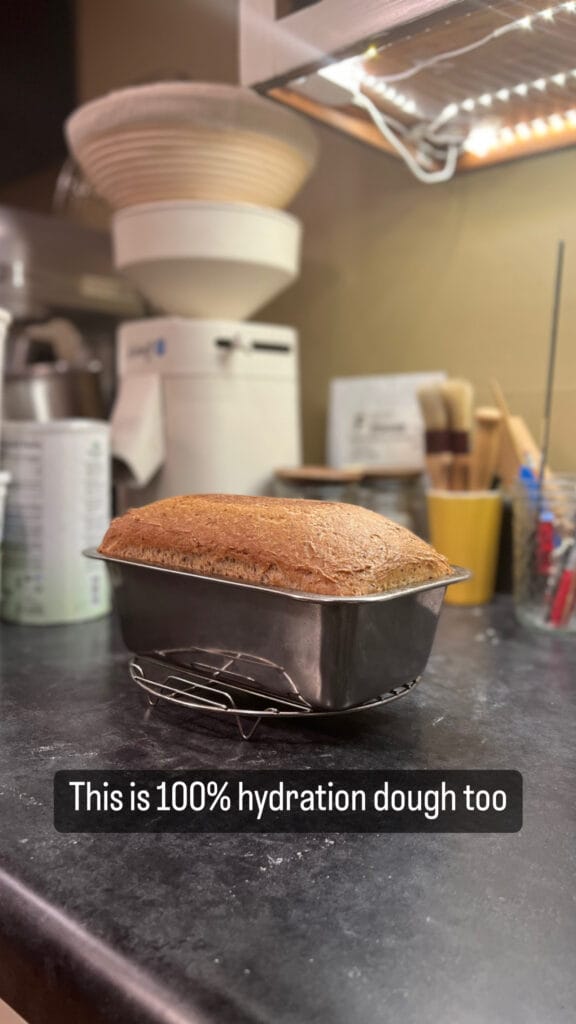
It will be incredibly sticky —it’s a 100% hydration dough, after-all, so you want to work fast.

And it’s helpful if you wet your hands while you’re doing this.

Just follow what I’m doing in the video. Let me know in the comments below if you I should upload a video of me doing it in real time.

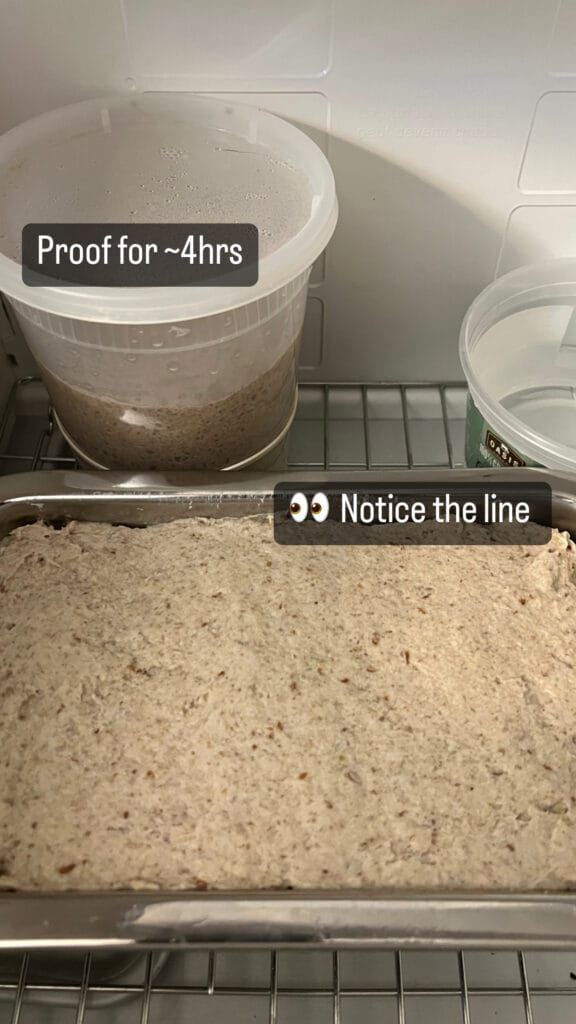
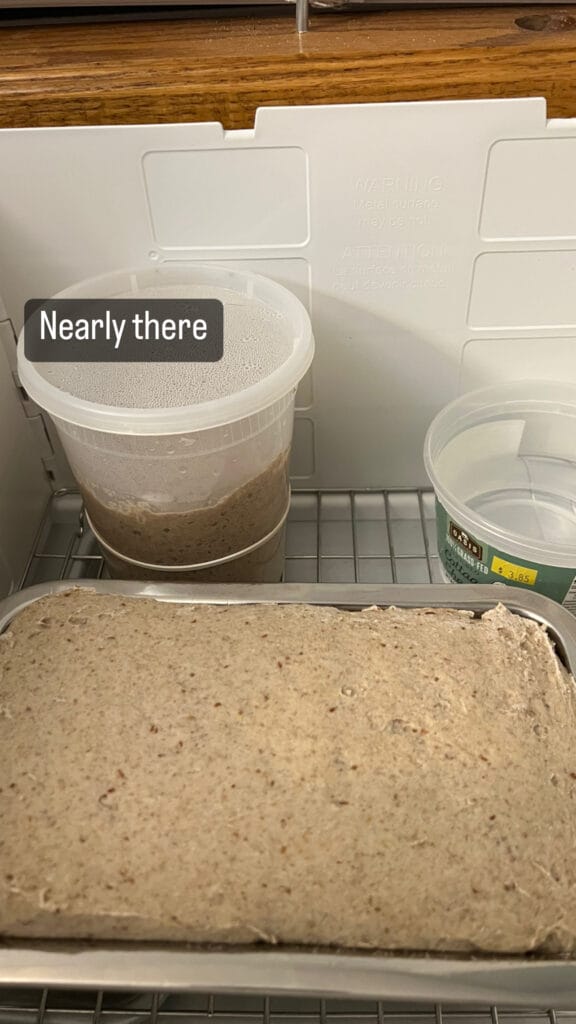
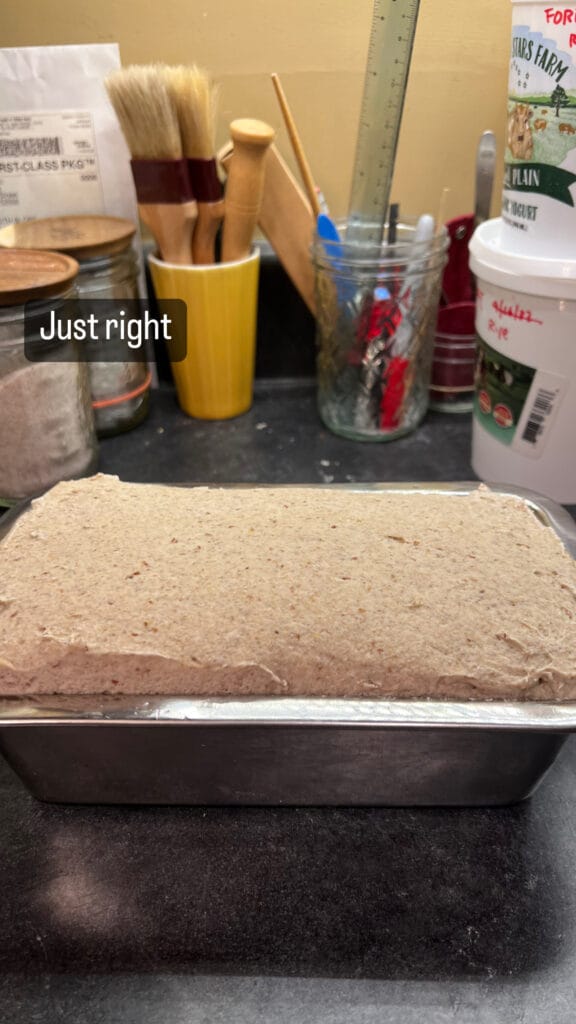
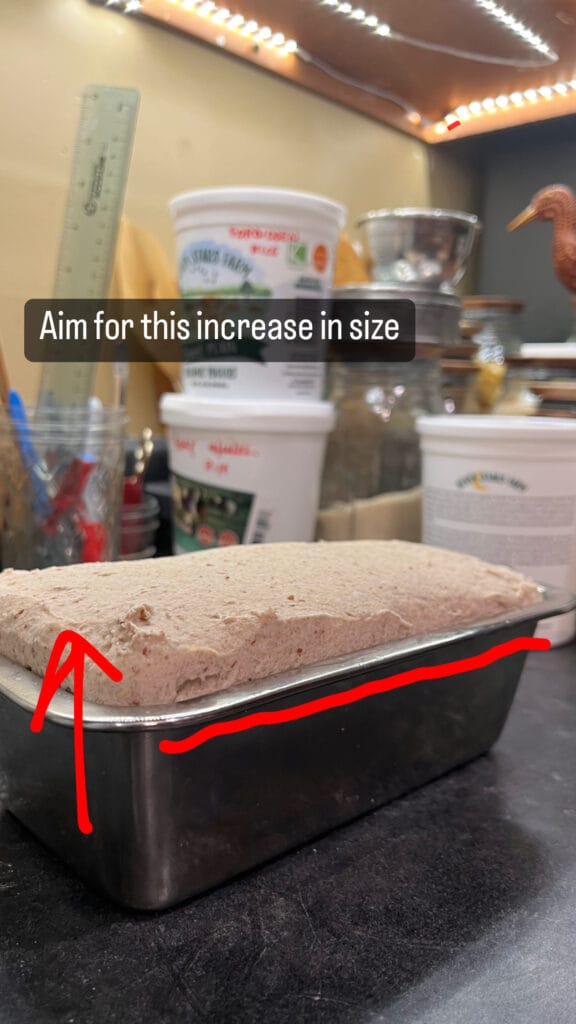
Step 4 – Proof your dough ~4 hrs

Gluten-free sourdough ferments rapidly.

You’re not looking for double the volume. You only want a slight increase in size. In a 70F room, this takes me around 4-5hrs —this is a ballpark time frame!

If it’s colder, it’ll take longer. Shorter if warmer.

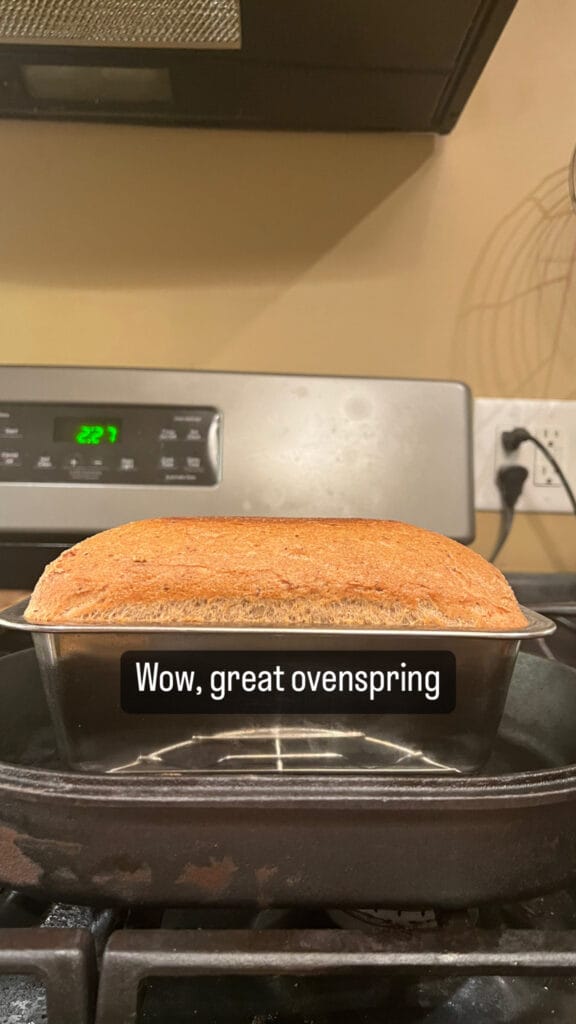
Take note of the pictures and captions below…

You can start baking at this point
But I like to push it further to find the fermentation sweet spot —hit that bullseye.

Stage 3 – Baking Time

Okay, it’s baking time!

Notice what I’m doing here in this video.

Everything about the baking process is intentional.

I’m baking in a dutch oven because I need a great conductor of heat and I need to trap in steam.

The steam stops the crust from cooking, hardening and burning before the dough can cook thoroughly.

Steam helps the dough cook more evenly.

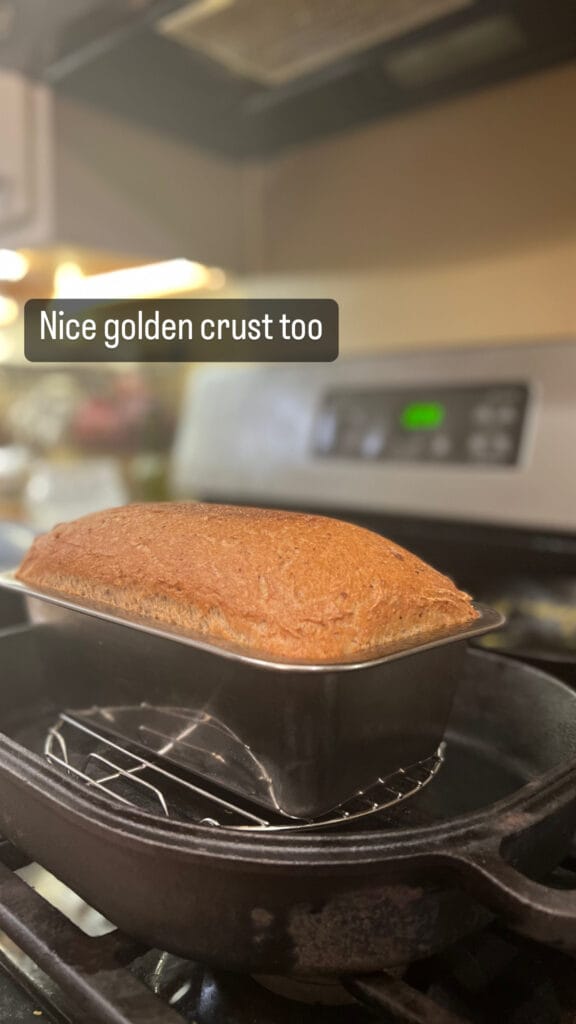
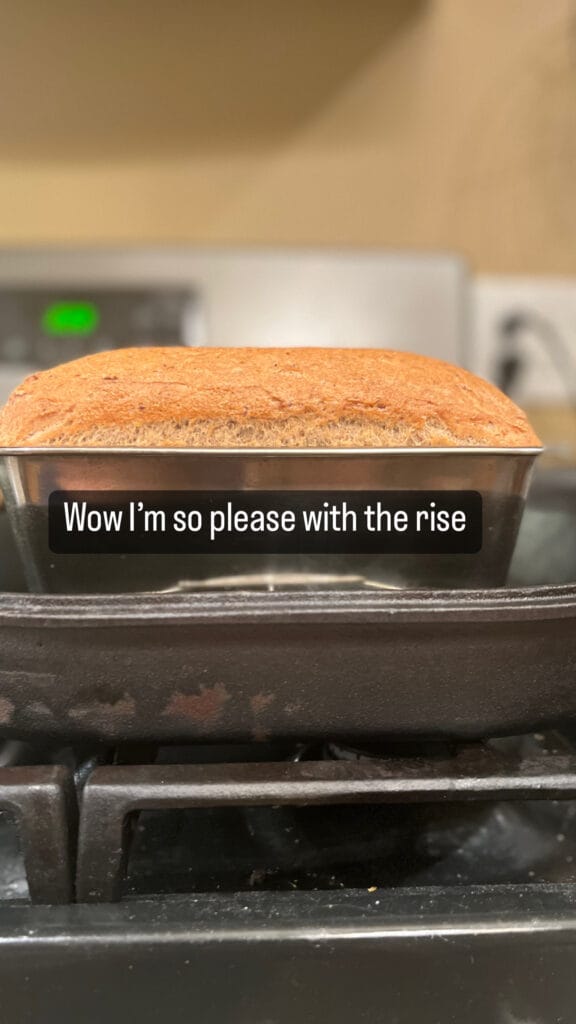
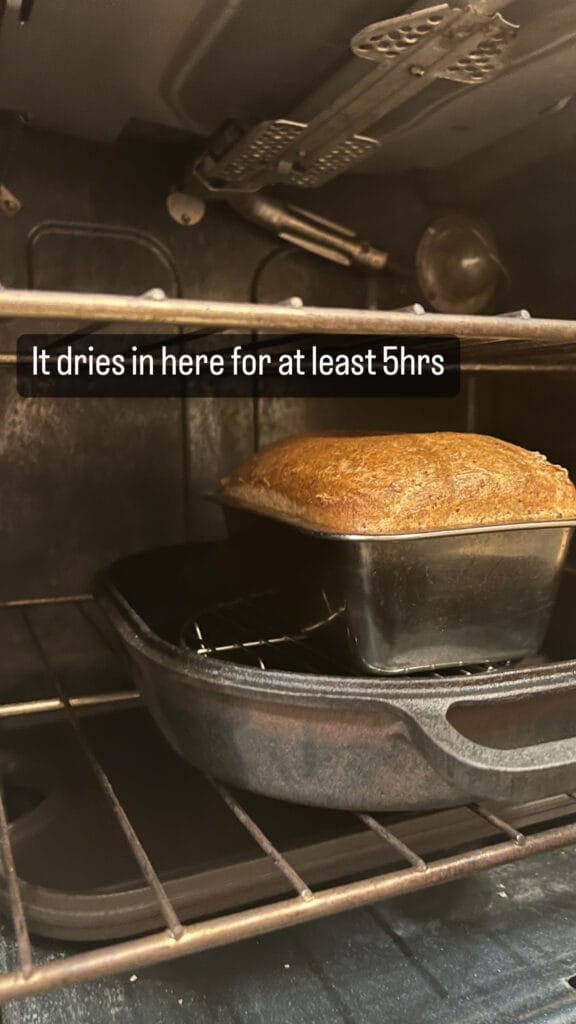
I’m putting my loaf pan on a rack inside my dutch oven because I don’t want to burn the bottom. The dutch oven is a mini oven, rack and all.

I’m spraying the surface of the dough with water and adding ice cubes on the bottom of my dutch oven because I want to increase steam.

Steam, steam, steam.

Bake this at 425F for roughly 45-50 minutes.

I helps if the dutch oven is screaming hot, so if you have time, pre-heat your oven with your dutch oven inside, for at least 1hr.

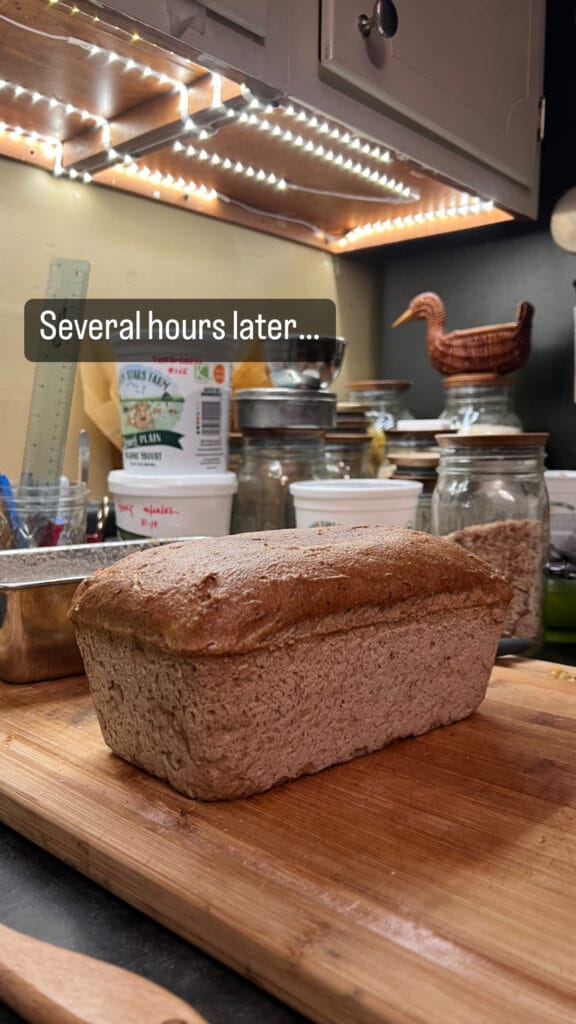
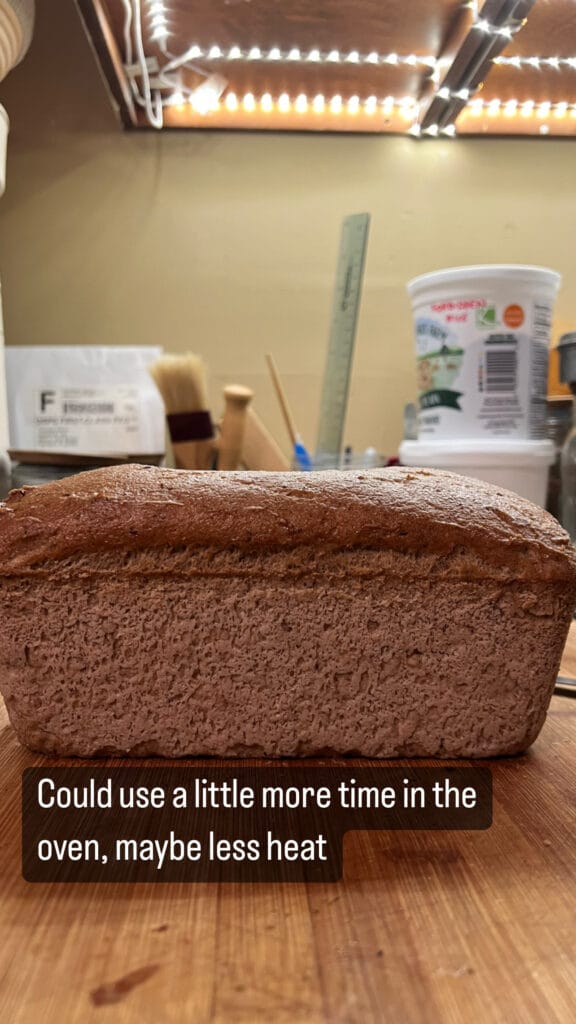
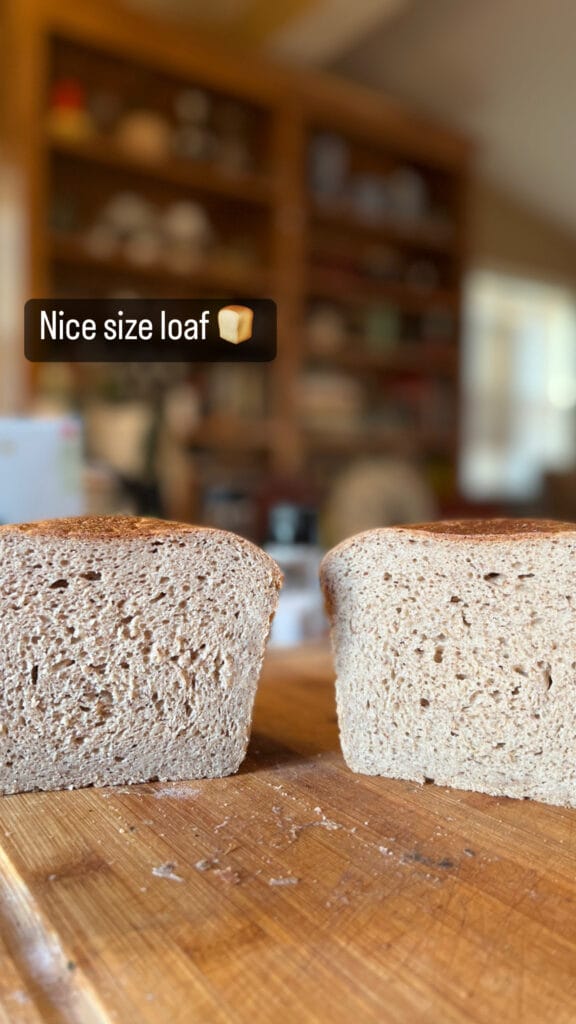
NOTE: It’s best to let this dry out for at least 2hrs if not more, out on your counter or in your oven. If you cut into this too soon, then your bread might be a little dense.

Final Reveal

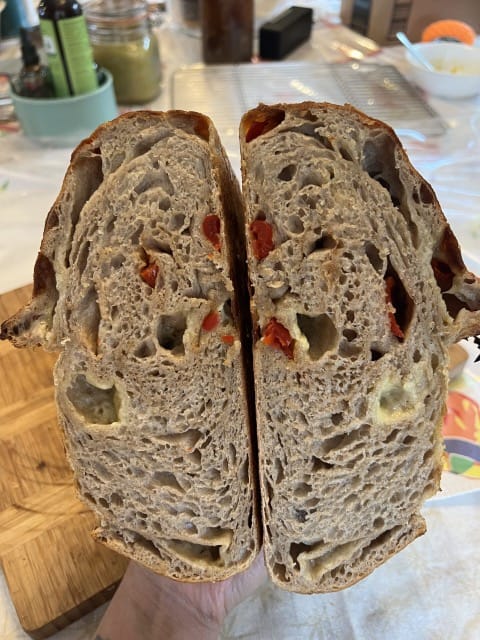
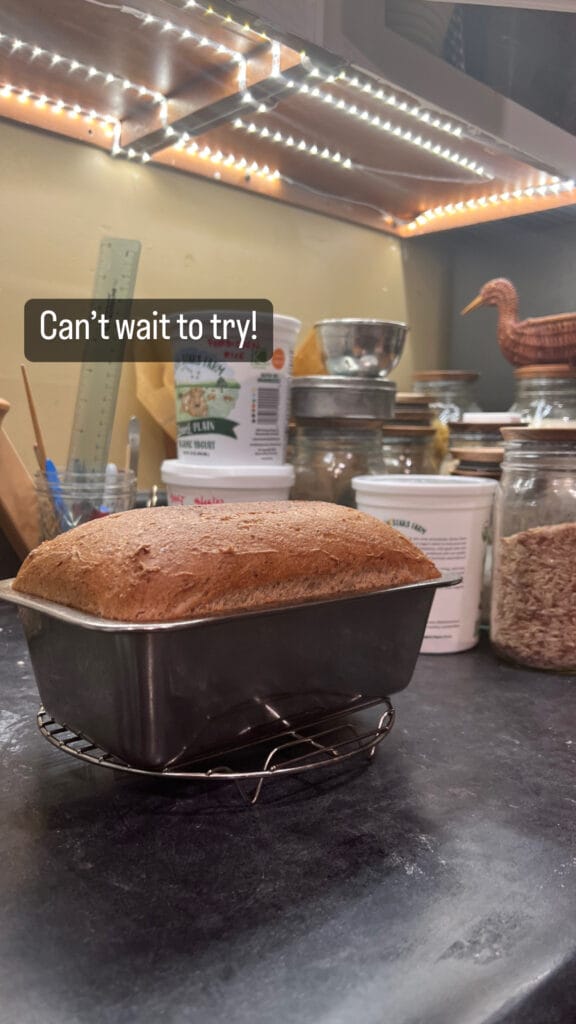
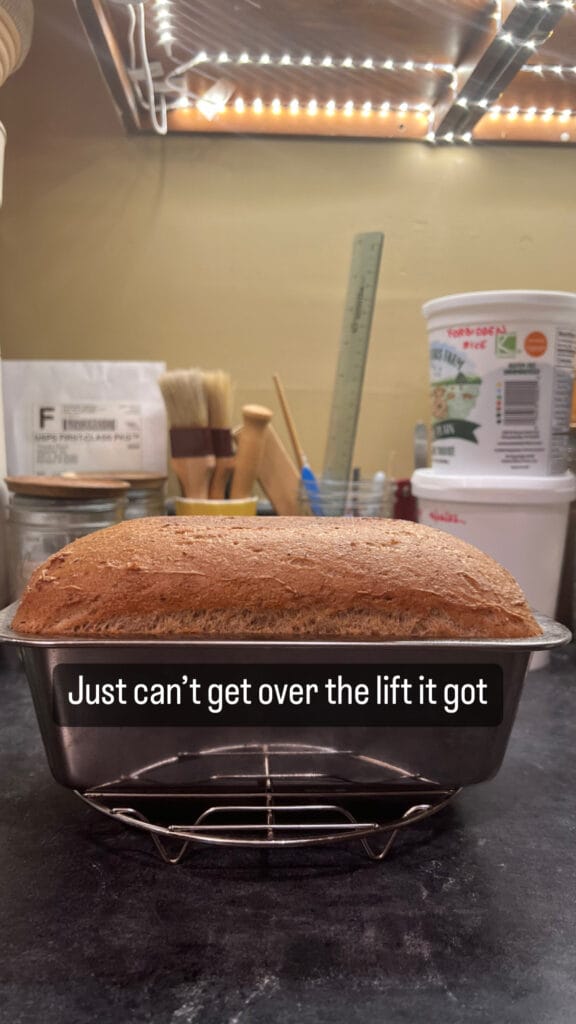
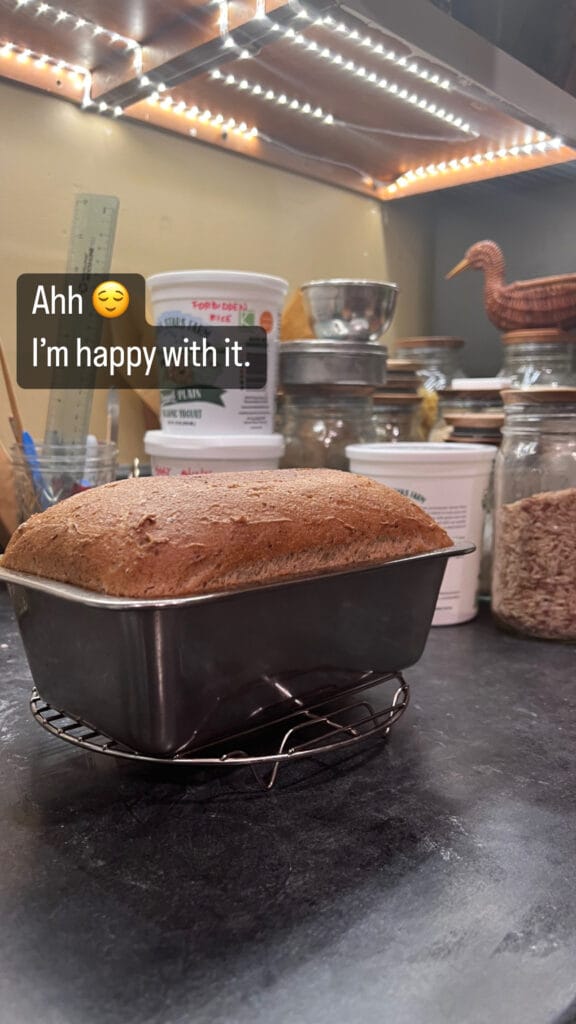
Alright, moment of truth. How does it look?

Filed Under: Sourdough Bread Tips, Sourdough Tutorials Tagged With: Gluten-Free

© 2026 How To Make Sourdough by Roselle Blore

About Contact Privacy Terms Refund